Sometimes I hear skeptics/non-Christians/atheists poke fun at new Christians for not knowing the Old Testament or completely understanding the New Testament. I think it's fair to say that the insults or questions are getting at this: your belief is on this very minimal god that doesn't lineup with the god explained in the Old Testament or even in all of the New Testament; your belief is a fraud, it is fake, simply not justified. What I want to ask is: does a person have to understand the entire bible before he can justifiably claim to trust in the life, work, death, and resurrection of Jesus Christ?
I don't think a person has to understand the entire bible before she can trust in the gospel. Why? Because the person is responding to the gospel that's why. What is the gospel? The Apostles describe the gospel, as I understand it, as the good news of Jesus Christ. What is the good news of Jesus Christ? One, that people by default are in rebellion against God. Two, that people cannot by themselves be good enough to stand before God in a not-guilty position (or put another way they cannot by themselves not be in rebellion against God). Three, that Jesus Christ paid the debt to God on account of his rebellious people. Fourth, now because of Jesus Christ his people can access God, i.e. worship him in spirit and truth. That is the gospel. Put another way that gospel is that God saves sinners. A person can hear the gospel and justifiably believe it without ever opening a bible. Why? Because that is what is required to be a Christian: hear the gospel, then repent, and then trust in Christ to do what he said he will do. That's it. A person doesn't have to respond to an entire reading of the bible in order to be a Christian. Think about this. The Apostles gave the gospel to people for salvation. That is what their audience had to respond to. The Apostles didn't approach a group of people or even one person, get out their old testament scrolls then start reading word for word the entire old testament then ask their audience (if the audience was still awake or even present) what they thought about that reading. Instead, they delivered the gospel. They didn't even deliver the gospel in the same way every time, e.g. Paul's address in Acts 17 is different from his other gospel messages (in style - the basic theme is the same). Well then, why have a bible? Hey, that's a good question.
Why do we have the bible? The bible is a collection of copied manuscripts from the ancient world. People of that time wanted a written record of the oral tradition. I understand that. Let's write it down to have a copy of this oral religion. I think that is why we have a bible. "Stuff" was going on at that time and it was worthy of being written down. Let's remember: back then, things to write on weren't easy to come by. If it was written down, then it was super important to the person or group of persons who wanted a written copy. The Israelites wanted a written history of their people, their theocratic society, to pass on to their children. Even the prophetic books are historical accounts of what was going on in that time of Israelite history. There are very few, if any, straight-up doctrinal books like in the new testament. This same kind of thinking can carry on into the new testament as well although the genre of written record is different in that the new testament is made up mostly of letters written to churches in doctrinal style. The bible is a copy of what was going on orally at that time and place. The bible is an excellent resource for the new and old Christian alike to learn, read, and hopefully apply the instructions written by the Prophets and Apostles. Do we blindly apply them? Not at all. The Christian is called upon by the Apostles to know why you believe what you believe. So, while the new Christian is justified in his belief in the gospel, he needs to go further. He won't find that the bible and the gospel contradict each other. Will he find some things in the bible that aren't tidy? Sure, for example, what does it mean to "live by the Spirit?" What did Paul mean by that? Obviously there are some different answers to that all through history. It's not tidy. However, just because it's not tidy doesn't mean there isn't stronger evidence for some positions over others. What is tidy is the broad them of Christianity. The essentials are super tidy. The non-essentials aren't and I wouldn't expect them to be tidy because they're non-essentials (like what kind of music do Christians play for worship?).
Wrapping this post up, I want to say that the new Christian is justified in his basic belief in the gospel. The gospel has nothing to do with ancient Israel's form of government. The gospel has nothing to do with ancient Israel's dress code, dietary laws, arranged marriages, polygamy, or other recorded historical acts of an ancient people that wasn't necessarily condoned by God. The gospel is that God saves sinners. If the person who responds positively to the gospel then that person is justified in that belief. It is wise for that person to read about the problems and solutions the new testament has in its collection as well as in the old testament just as it is very important for him to read about the author of the gospel: Jesus Christ. The new Christian should read John's historical account of Jesus Christ to further his knowledge of the Hero described in the entire bible that he heard about in the gospel. The new Christian begins on a road she has never been on before. The road is bumpy, but it has a beautiful destination.
Related posts
Theism as a properly basic belief - highly recommend
What about the OT? It's unethical
OT laws on relations between adults
Can we trust the bible?
Thursday, June 6, 2013


Wednesday, June 5, 2013
Water Cooler Wednesday: Marriage and Government

Brian: Hey Andy, how is everything going?
Andy: Oh, you know, plugging along with these reports.
*both sip water*
Andy: Hey, did you read where Rand Paul talked about government getting out of marriage? What are your thoughts on government getting out of the marriage business? You're all for "small government" so you probably think it's a good move I bet.
Brian: The government "getting out of" the marriage business is a very libertarian viewpoint. There are, I suppose, some attractive things about that, but "getting the government out of" what are euphemistically called "social issues" is usually where libertarians and I part company. John Stossel, for example, has long been one of my favorite commentators, but he's too liberal on the social issues for me. I really feel like it's important for us as a society to say "This is OK, and this is not." Sadly, our society seems to think homosexual marriage is OK, when it is clearly unnatural. I know it's been said before, but it is a slippery slope. When you accept homosexual marriage, there is a clear path to acceptance of polygamy, beastiality, and even necrophilia. The other side will try to dismiss that as extreme, but think how extreme homosexual marriage seemed as little as a decade ago. It's coming; hide and watch.
Andy: Well, what do you think of marriage licenses and the like not coming around until the 1920s? I understand that marriage wasn't a government thing until that time.
Brian: I've never looked into it, but I'm sure that's true. Problem is, prior to the 1920s (and for a good while afterward), nobody considered homosexual "marriage" legitimate. Same with polygamy, which was actively condemned from the time of the Mormons. If we went back to that lax standard today, you could get five wacko witnesses to say they saw you marry a ham sandwich, and that would have to be legal. The cat is out of the bag, now. Unfortunately, I think Rush Limbaugh is right. This is a lost issue. It's just a matter of how long it takes. Once that happens, we begin the descent toward recognizing other deviant relationships as "marriage". Eventually, we end up where the Roman Empire did, with flagrant, open promiscuity of all kinds displayed everywhere.
Andy: I guess I'm on the fence with this issue. I see and understand both sides. On the one hand, I want the State out of the marriage business because, quite frankly, I don't like being married to my wife and the state right? The state has a part in my private life and my future children, etc. I don't like that. Since that didn't come around until the 1920's why do it today? Especially since men I admire, from what I've read about them anyway, didn't have marriage licenses! (Abe Lincoln and George Washington). I guess the character of our citizens was quite different back then. People focused more on their actions and such when "no one was looking" instead of, remarkably, around the 1920's and 30's people focused more on their public image and their public character, caring less about their private character. What you did when no one was looking or just when a few people were looking no longer mattered. So, the moral climate changed a lot. I see that as a decent blow to the "get the state out of the marriage business" position.
I also see the good points of the state being in the marriage business. This positions says society can't survive without the family unit. The state wants the society to survive and prosper so it can survive and prosper. They say the family unit is the blood of the country and without it, America will fall. So, the state has an interest in making strong families by rewarding strong, monogamous, traditional families that will raise children to raise children to raise children and keep America strong. I understand this position also says that since no-fault divorce came along, the state really had to promote the traditional family. Is it too much intervention on the personal lives of Americans? Well, it doesn't help. If more intervention was done away with, then this intervention would be minimal I guess. I think the state can still promote and reward strong traditional families without such intervention like child services and family court.
Brian: Yes, I too am a bit on the fence about just how much state intervention there should be. There are lots of whack jobs out there who abuse spouses and children, and without legal (i.e. the state's) authority, there's very little intervention that can happen short of vigilante justice, which is a bad thing. Problem is, the state too often makes bad decisions or is ineffective in enforcing the laws aimed at protecting the vulnerable. Unfortunately, that's usually the case any time the state gets involved - they have a noble idea, but they are horribly ineffective in their execution. Hence, libertarianism. I get that, even when I don't agree with it.
The promotion of a strong family unit should be the goal of the state, but clearly it isn't. Welfare benefits that promote single-parent households, free distribution of condoms and sex education classes (both of which promote promiscuity "without consequences"), recognition of homosexual marriage and homosexual adoption, relaxation of indecency standards to allow relentless promotion of deviant and dangerous sexual behavior in the media, no-fault divorce, legalization of abortion on demand... all of these things - and no doubt many more - actively work against the formation of strong families. So government has not only made ineffective use of the mechanisms at its disposal to promote strong families; more and more, it has actively abused those mechanisms to weaken the family.
Andy: *looks at wall clock* Well, break is over.
Brian: Yep. Time to get back at it.
*both sip water then throw cups away*
IRS: I got the power!

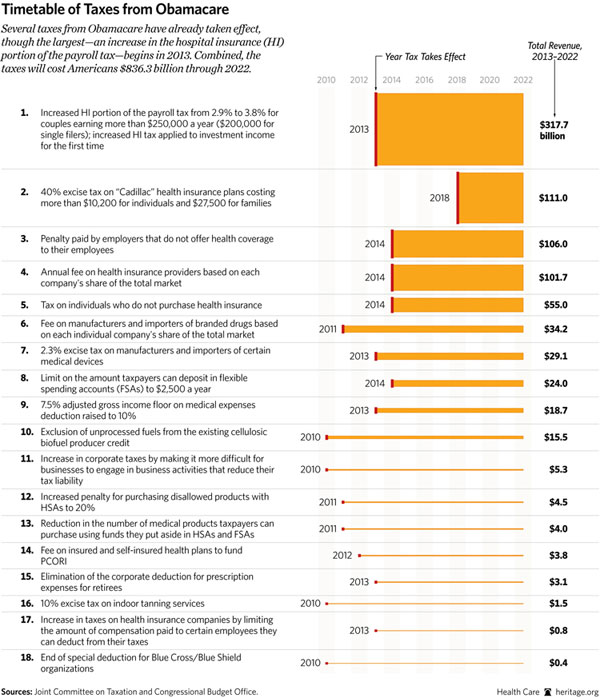
That power is from Obamacare boi-boi. I read the following "by the numbers" from the Morning Bell about the powers granted to the IRS as a result of Obamacare.
18—New taxes in Obamacare, including 12 that directly violate then-Senator Barack Obama’s “firm pledge” to those making under $250,000 per year that he would not “raise any of your taxes.”Awesome huh? Read the whole post here.
47—New provisions Obamacare charges the IRS with implementing, according to the Government Accountability Office.
$695—Tax for not buying “government-approved” health insurance the IRS will be charged with enforcing on all Americans.
1,954—Full-time bureaucrats the IRS wants to devote to Obamacare implementation and enforcement in the upcoming fiscal year.
60,000,000—Medical records the IRS has been charged with improperly seizing, raising concerns about whether the agency can handle the personal health insurance information all Americans will be required to submit to the IRS.
$439,584,000—The IRS’s request for new spending on Obamacare implementation in the upcoming fiscal year; the request did not specify how much of those funds the IRS will spend on the “Cupid shuffle.”
6,100,000,000—Man-hours Americans already devote to tax compliance, according to the National Taxpayer Advocate, a burden that will rise significantly thanks to Obamacare.
$1,000,000,000,000—New revenue raised by Obamacare in its first 10 years alone, according to the Congressional Budget Office, sums that will only rise in future decades.
Tuesday, June 4, 2013
Quote of the Week: Luther on Apologetics
 If I profess with the loudest voice and clearest exposition every portion
of the truth of God except precisely that little point which the world
and the devil are at that moment attacking, I am not confessing Christ,
however boldly I may be professing Christ. Where the battle rages, there
the loyalty of the soldier is proved; and to be steady on all the
battlefield besides, is mere flight and disgrace if he flinches at that
point.
-Martin Luther
Friday, May 24, 2013
What about that Old Testament stuff? It's unethical!
Often, the main offense people take to
the Bible is the old testament. They see the actions of God in the old
testament as cruel, unjust, unloving and that's just some of the nice
things said; I've heard worse about the old testament and of God. At
first read, sure, there are cruel and unjust things (according to us)
done in the old testament, there's no doubt about that. After a second
read, a second thought, and looking at another viewpoint the old
testament is understood clearly.
I've read a good essay about the old testament and its ethics, so I thought I would share it here. This essay is from the Apologetics Study Bible and it's written by Christopher Wright.
1) Prejudice against scripture
More OT ethics resources:
Peter S. Williams on the ethics of the Old Testament here
Questions about the Bible
Questions about God
Moral and ethics resources at Apologetics315
I've read a good essay about the old testament and its ethics, so I thought I would share it here. This essay is from the Apologetics Study Bible and it's written by Christopher Wright.
1) Prejudice against scripture
- OT portrays a violent God
- OT portrays a violent people
- OT is filled with narratives recounting horrendous events
- Disreputable people playing major roles
- It was ethical for Jesus
- He accepted the truth and ethical validity of the OT in His life, mission, and teaching.
- Mt 6-7 sayings don't contradict, but deepen/correct popular inferences.
- Jesus reminded His hearers that Leviticus 19 also says, "Love the alien as yourself," extending this to include "love your enemy."
- Jesus affirmed and strengthened the OT ethic.
- Narratives describe what happened, not what was necessarily approved.
- We assume wrongly that if a story is in scripture, it must be "what God wanted."
- Biblical narrators dealt with the real world, with all its corrupt and fallen ambiguity.
- Shouldn't mistake realism for ethical approval.
- OT stories challenge us to wonder at God's amazing grace and to patience in continually working out His purposes through such morally compromised people.
- OT stories challenge us to be discerning in evaluating their conduct according to standards the OT itself provides.
- The Conquest of Canaan
- Must be understood for what it was.
- It was a limited event. The conquest narratives describe one particular period of Israel's long history. Many of the other wars that occur in the OT narrative had no divine sanction, and some were clearly condemned as the actions of proud, greedy Kings or military rivals.
- Metaphorical, not literal
- Not a license for unlimited vengeance, but the opposite; it established the fundamental legal principle of proportionality.
- Punishment mustn't exceed the gravity of the offense.
More OT ethics resources:
Peter S. Williams on the ethics of the Old Testament here
Questions about the Bible
Questions about God
Moral and ethics resources at Apologetics315
Friday Mentionables: Piper's tweet, origin of life, and the IRS

Those Deleted Tweets - Desiring God blog
Tweet by John Piper after Oklahoma tornado - Knue 101.5
Origin of life debate between Michael Ruse and Faz Rana (debate summary/review)
Owning Human Genes - Talking Philosophy
IRS fascist Lois Lerner pleads fifth to avoid transparency and accountability - WK blog
Tuesday, May 21, 2013
Watercooler Wednesday: The Honeymoon is over or The Obama Admin Spied on Fox Reporter

It's here! And a day early at that. I wanted to go ahead and get it out. Starting next week, Watercooler Wednesday will actually be on Wednesday. Andy and Brian are two characters I've constructed out of personalities from my past and the present of people I've met in person and online. They will develop more as weeks go by. Also, these conversations have been edited from emails and messages I've had with real people. I've done my best to edit them to fit the characters of Andy and Brian. I will have profiles on Andy and Brian a little later when I actually decide what to do with them in this series. For now, just know they are two guys at work talking at the watercooler.
Andy: Brian, what up my man? *laughs* Did you read the "chilling" report on twitchy? I read about it on that right-wing nutjob blog Wintery Knight. Why are right-wingers so upset about it? Scanning emails is a form of safety. I'm not that angry with what happened, although, I have to admit I was a little surprised by it.
Brian: The only surprising thing here is that this got out. Anyone who hasn't seen - nearly from the day he took office - that Eric Holder is the very definition of government corruption is blind as a bat. The dude is evil, and I don't use that term lightly. Cover-ups everywhere, and they all lead back to him. He, of course, not only doesn't remember anything - a la Hillary in the Whitewater investigation - but he actively lashes out at anyone who dares question him. This is a guy who is committed to fundamentally restructuring our government in very radical ways and using all means, legal and illegal, to get it done. In some ways, I think he's more of a villain than Obama.
All that said, Obama knew what he was getting with Holder. He got exactly what he wanted and has backed Holder to the hilt. If the fecal matter ever contacts the air circulation device - and it looks like maybe it has - Holder becomes a martyr to protect Obama. Actually, I think Holder would relish that role, politically dying for the cause of statism. Some of Obama's picks - like Hillary - were concessions to the political establishment, but Holder and Emanuel were clearly the picks of the young, Alinski-trained revolutionary Obama. The one I can't decide on is Sebelius. She didn't strike me as that radical, more of your average, run-of-the-mill liberal, when she was nominated. Not a lot of radicals can get elected governor of a pretty conservative state like Kansas, but HHS has been one of the more aggressive agencies in promoting statism in this administration. Is she just a willing tool or does she actively seek to radically increase the size and scope of government? I can't decide.
I think it's interesting to examine this Rosen story in light of what else was going on around that time... the "war on Fox News". People forget that the administration was trying to de-legitimize FNC as a news organization at that time. Was that to weaken or remove Rosen's press protections? Was it simply another tactic to silence a critical voice? Was there another motive that isn't yet clear? The fact that all the other news orgs would play along was sure to help. Not only is Fox the only conservative news network out there, they also tend to spank the others in the ratings. All that allowed the war on Fox to continue with almost no protest in the MSM. Only now, when the parallels between Obama and Nixon, the press's favorite Republican whipping boy (and with good reason), are too obvious to ignore, does all this get the play it deserves.
I only worry that the issues involved are too arcane to resonate with the public at large. "We were just trying to keep you safe" is something people understand and buy into. "We need the right to publish classified information in order to keep the government honest" is a harder case to make to the average Joe.
Andy: You know I think this issue might be too arcane for the very reason you mentioned. I like safety. A lot. If the government can be there and protect me then I'm all for it, especially if it looks like a bad guy is the recipient of justice. Some say I do not realize the huge amount of freedom Americans lose for "protection" like that. For example my friend Julia particularly likes to point out that I like government safety, that I talk highly of the FDA, foodstamps, and Homeland Security (police state stuff) but then I also hate when some of my freedoms are taken away, e.g. taxes being too high or religious freedoms. She tries to explain to me that is the result of having a large federal government and police state. She also tries to explain those programs are how "it" (government) gets so large. It's hard for me to see that and after she points it out, sometimes (depending on my mood) I'll relent and say, "Well, I do like the safety those programs bring." I really like the idea of our budget getting balanced, getting out of debt, and I am a big fan of political and religious freedom, but I also really like safety at a higher level. As some wise guy once said, "Safety first!"
Brian: "They who can give up essential liberty to obtain a little temporary safety, deserve neither liberty nor safety." - Benjamin Franklin
I think a lot of folks have the mindset that, if you have nothing to hide, you shouldn't fear government monitoring of your activities. I myself have subscribed to that notion in the past, and I'm still a little conflicted on the idea of a "right to privacy". It isn't explicitly in the Constitution - it's derived from the Fourth Amendment, I think - and the courts have convoluted this implied right to defend everything from abortion to same-sex marriage. On the other hand, it gets a little dicier with the press, since their job is to report the facts, however they came by them.
As to your friend's point about how "it" gets so large, it's because bureaucracy naturally seeks to perpetuate and expand itself. Consider the Census, for example. The Census was mandated to take a count of how many people live in a particular place to determine congressional apportionment. That's it. Have you seen a Census form? Should be about the size of a pack of gum or a business card at most: "How many folks, counting you, live at your house? OK, thanks. U.S. Census Bureau" Instead, it asks a lot of personal questions about income, race, your job, etc. And that's the "short form". I've not seen a "long form". Now they send people to your house to interview you about all this personal stuff. It costs a fortune! (Remember when Obama was touting the job growth that resulted from hiring a bunch of temporary census workers?) And then they do all these estimates and stuff in between years. Why? They have one job. Find out how many people live in a place every 10 years! But no, they had to expand to do all this other "useful" stuff. Like we don't have polling agencies and whatnot for that. And don't give me that crap about getting unbiased data. We've seen just how "unbiased" the federal government is in the last couple of weeks, haven't we?
What about the National Weather Service? Like we don't have the Weather Channel and umpteen local stations with Doppler radars! But no, now we've got the NWS inventing global warming to perpetuate its own existence, make a case for more funding, etc. The postal service? The only reason UPS and FedEx don't do the same job cheaper is because the federal government outlawed them from competing with the USPS and its bloated union contracts!
Listen, on some things, I think Ron Paul is a straight up nutjob, but give him or someone like Tom Coburn about a week to hack out the stupid crap that the federal government either isn't explicitly authorized to do or shouldn't be doing, and the national deficit is gonna sink like the friggin' Titanic.
Andy: Humph.You righties are so dumb.
*Andy takes a long drink then goes back to his office*
Brian: Sigh. That is some good water.
*Brian whistles back to his office*
Subscribe to:
Posts (Atom)