"One thing that does worry me is the belief by many Darwinians,
especially, that their position implies atheism. If it does, then I
think the creationists have a good point—Darwinism is getting close to
religion, or at least to implications about religion. In which case,
does it not violate the constitutional separation of church and state?
My personal response has been to write a book (Can a Darwinian Be a Christian?) arguing that Darwinism does not imply atheism—it does not imply God, either, but that is another matter."
- Michael Ruse, An Interview with Michael Ruse
Showing posts with label atheism. Show all posts
Showing posts with label atheism. Show all posts
Tuesday, November 26, 2013


Tuesday, November 19, 2013
Quote of the Week: Chad Meister on the Conclusion of an Atheistic Worldview
While it is good that Ruse and Wilson acknowledge this conclusion and
don’t try to smuggle in an objective morality in their atheistic
worldview, I wonder if they have contemplated the moral ramifications of
their position. On their worldview, we are merely evolved brutes whose
very existence is derived from the naturalistic laws of evolution,
including random mutation and survival of the fittest in which the
strong survive and the weak die off (and sometimes the strong kill off
the weak in their struggle for survival). We are simply the byproducts
of a “nature red in tooth and claw,” to quote the poet Tennyson. Is it
any wonder that the atheistic regimes of Mao Zedong, Joseph Stalin,
Vladimir Lenin, and Pol Pot—devoid as they were of any significant
Christian influence—were responsible for the mass murder of over 100
million people in their quest for dominance, more lives destroyed than
in all of the religious wars in the history of the human race? These
regimes were not discordant with an atheistic basis of morality; they
were consistent with it.
Christopher Hitchens and his ilk are wrong: Christian morality, rooted as it is in a transcendent, personal, omni-benevolent God, has truly been good for the world. Heaven help us if an atheistic morality, rooted in evolutionary theory or otherwise, should ever become the guiding moral force on a global scale.
- Chad Meister, Atheists and the Quest for Objective Morality
Christopher Hitchens and his ilk are wrong: Christian morality, rooted as it is in a transcendent, personal, omni-benevolent God, has truly been good for the world. Heaven help us if an atheistic morality, rooted in evolutionary theory or otherwise, should ever become the guiding moral force on a global scale.
- Chad Meister, Atheists and the Quest for Objective Morality
Monday, August 26, 2013
Quote of the Week: Nietzsche on Christian Morality
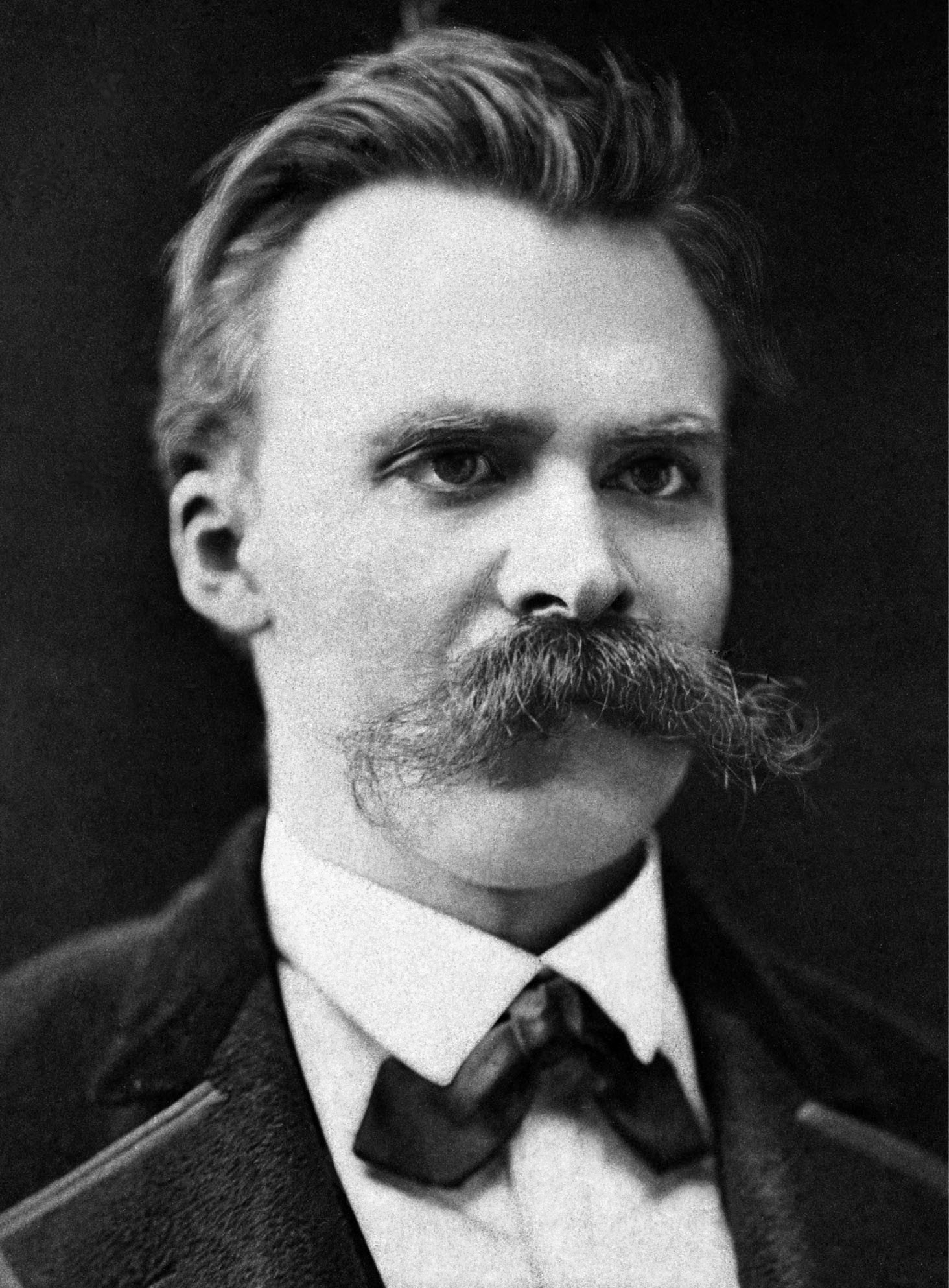
Friedrich Nietzsche, Expeditions of an Untimely Man §5.
Monday, August 19, 2013
Quote of the Week: Kelley Ross on the absurdity of life
- Kelley L. Ross, in the "Existentialism" article at The Proceedings of the Friesian School
Thursday, August 8, 2013
Krauss is a goon
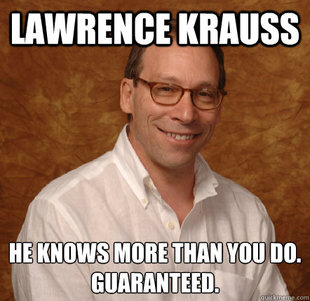
Yes he is. Krauss may be amazing in his field, his daily work, etc. but he can be and is a goon. I'm saying this because of what I've read of his actions during his recent debate with William Lane Craig. On Craig's facebook page he wrote:
Last night's "dialogue" with Krauss was like gladitorial combat! He even had a buzzer which he was pushing at various times during my speech to register his disapproval and try to disrupt my speaking!Let me imitate the Miz for a bit and say the following to Krauss: really? Really? Really? If what Craig said is true that's what I'm left thinking about Krauss. Really Krauss? Really? Krauss has reduced seeking truth in debate to an episode of "America's got talent." Is this how man decides truth now? He decides something is true with a touch of a buzzer? That was easy. Finding truth is easy when truth is whatever lines up with your personal opinion. This reminds me of the thinking of a toddler; no offense to you toddlers out there.
If Krauss did in fact do what Craig has said then I'm very disappointed. I cannot take Krauss seriously when he speaks of his reasonableness, his love of facts, and such. How can I? Krauss hasn't shown, to me, that he is serious about truth, that he is serious about finding the answers to life's "permanent questions." It is hard for me to believe that Krauss lives a serious life. What is a serious life? Allan Bloom wrote that, "A serious life means being fully aware of the alternatives, thinking about them with all the intensity one brings to bear on life-and-death questions, in full recognition that every choice is a great risk with necessary consequences that are hard to bear."1 A serious inquiry of the truth will not lead to acting like a goon in a debate. Krauss is an embarrassment to atheism and should not be taken seriously in matters of ultimate truths. There are plenty of respectable atheists out there who are serious about finding answers to life's biggest questions and those men should be the ones representing atheism in public debates instead of goofballs like Krauss. Of course, charisma, jokes, and bad philosophy are the qualifications for a good representative for atheism today right? Those things are the values that people want in their "hero" to go against theists in public debate. What a shame. I'm not saying theism is absent of such public defenders (because they're out there...) but this arrogant, intolerant, close-minded, childish behavior is more visible on the "new atheism" or "new-new atheism" side of the debate in my opinion.
Never fear though. There are quite a few debates worth your time if you are serious about finding answers to such questions on life. There are too many to list here in this post. I will list some of them though.
William Lane Craig vs Dacey - Also notice in this post, WK lists two other great debates I recommend: Craig vs Millican and Craig vs Walter Sinnot-Armstrong. Since you can find those debates in this one link I won't list them here.
Dinesh D'Souza vs Michael Shermer Some might disagree with me on this, but Shermer is definitely a respectable guy in debate and so is D'Souza. I think this is a great debate. It's one that definitely opened my mind to checking out Christianity.
Source:
1. Allan Bloom, The Closing of the American Mind
Friday, June 7, 2013
Friday Mentionables: Properly Basic Beliefs, Darwinian Morality, Open Theism, and Original Sin

Is sin an unintended consequence of creation? part1 and part 2 A View From The Right
Is belief in God properly basic? Alvin Plantinga
Foundationalist Theories of epistemic justification Standford Encyclopedia of Philosophy
What is open theism Greg Boyd ReKnew
A Darwinian Approach to Moral Philosophy Michael Ruse
Friday, March 8, 2013
Friday Mentionables
Yeah so I decided to start a weekly, Friday Mentionables post which is a collection of blog posts I found interesting. Maybe you will to.
Why do atheists like Dan Barker abandon their faith?
Why do leftists prefer to cut essential services instead of trimming waste?
Socrates and the Good Death
Does God give new revelation?
Is Everything Sad Going to Come True?
The Reasonableness of Historic Christian Faith
Enjoy! Comment and follow the blog for more stuff like this.
Why do atheists like Dan Barker abandon their faith?
Why do leftists prefer to cut essential services instead of trimming waste?
Socrates and the Good Death
Does God give new revelation?
Is Everything Sad Going to Come True?
The Reasonableness of Historic Christian Faith
Enjoy! Comment and follow the blog for more stuff like this.
Wednesday, February 27, 2013
The Moral Poverty of Naturalism
Yet another great share from the Wintery Knight blog on Mark D. Linville's the moral poverty of evolutionary naturalism.
Excerpt:
11. Moreland, pp. 47
Check out all of my posts on morality by clicking here.
Excerpt:
But even if we are assured that a “normal” person will be prompted by the social instincts and that those instincts are typically flanked and reinforced by a set of moral emotions, we still do not have a truly normative account of moral obligation. There is nothing in Darwin’s own account to indicate that the ensuing sense of guilt—a guilty feeling—is indicative of actual moral guilt resulting from the violation of an objective moral law. The revenge taken by one’s own conscience amounts to a sort of second-order propensity to feel a certain way given one’s past relation to conflicting first-order propensities (e.g., the father’s impulse to save his child versus his impulse to save himself). Unless we import normative considerations from some other source, it seems that, whether it is a first or second-order inclination,one’s being prompted by it is more readily understood as a descriptive feature of one’s own psychology than material for a normative assessment of one’s behavior or character. And, assuming that there is anything to this observation, an ascent into even higher levels of propensities (“I feel guilty for not having felt guilty for not being remorseful over not obeying my social instincts…”) introduces nothing of normative import. Suppose you encounter a man who neither feels the pull of social, paternal or familial instincts nor is in the least bit concerned over his apparent lack of conscience. What, from a strictly Darwinian perspective, can one say to him that is of any serious moral import? “You are not moved to action by the impulses that move most of us.” Right. So?
The problem afflicts contemporary construals of an evolutionary account of human morality. Consider Michael Shermer’s explanation for the evolution of a moral sense—the “science of good and evil.” He explains,
By a moral sense, I mean a moral feeling or emotion generated by actions. For example, positive emotions such as righteousness and pride are experienced as the psychological feeling of doing “good.” These moral emotions likely evolved out of behaviors that were reinforced as being good either for the individual or for the group.2Shermer goes on to compare such moral emotions to other emotions and sensations that are universally experienced, such as hunger and the sexual urge. He then addresses the question of moral motivation.
In this evolutionary theory of morality, asking “Why should we be moral?” is like asking “Why should we be hungry?” or “Why should we be horny?” For that matter, we could ask, “Why should we be jealous?” or “Why should we fall in love?” The answer is that it is as much a part of human nature to be moral as it is to be hungry, horny, jealous, and in love.3Thus, according to Shermer, given an evolutionary account, such a question is simply a non-starter. Moral motivation is a given as it is wired in as one of our basic drives. Of course, one might point out that Shermer’s “moral emotions” often do need encouragement in a way that, say, “horniness,” does not. More importantly, Shermer apparently fails to notice that if asking “Why should I be moral?” is like asking, “Why should I be horny?” then asserting, “You ought to be moral” is like asserting, “You ought to be horny.” As goes the interrogative, so goes the imperative. But if the latter seems out of place, then, on Shermer’s view, so is the former.
One might thus observe that if morality is anything at all, it is irreducibly normative in nature. But the Darwinian account winds up reducing morality to descriptive features of human psychology. Like the libido, either the moral sense is present and active or it is not. If it is, then we might expect one to behave accordingly. If not, why, then, as a famous blues man once put it, “the boogie woogie just ain’t in me.” And so the resulting “morality” is that in name only.
In light of such considerations, it is tempting to conclude with C. S. Lewis that, if the naturalist remembered his philosophy out of school, he would recognize that any claim to the effect that “I ought” is on a par with “I itch,” in that it is nothing more than a descriptive piece of autobiography with no essential reference to any actual obligations.
At this point I want to recommend reading J.P. Moreland's essay on human worth and naturalism he wrote for the book "God is Great, God is Good..." The following ideas and sources are from that essay. I include this summary of human worth and naturalism because I think the moral argument for God has a lot of weight in human dignity and intrinsic worth.
One would think, since naturalism cannot explain the existence of objective morality, it counts as a nod toward Christian theism. Atheist J.L. Mackie acknowledged: "Moral properties constitute so odd a cluster of properties and relations that they are most unlikely to have arisen in the ordinary course of events without an all-powerful god to create them."2 The best scientific naturalism can do is explain what I call "low-end" morality, which is explained partly by kin-selection and reciprocal altruism; it cannot explain intrinsic value, objective moral order, or the high equal value and rights of human persons (high-end morality). Naturalists Peter Singer and Helga Kuhse acknowledge that the best justification for the high equal value of human persons is in the grounding of Judeo-Christian doctrine of the image of God.3 This claim by Singer and Kuhse is acknowledged by many thinkers, most notably by Joel Feinberg. 4
One would think, since naturalism cannot explain the existence of objective morality, it counts as a nod toward Christian theism. Atheist J.L. Mackie acknowledged: "Moral properties constitute so odd a cluster of properties and relations that they are most unlikely to have arisen in the ordinary course of events without an all-powerful god to create them."2 The best scientific naturalism can do is explain what I call "low-end" morality, which is explained partly by kin-selection and reciprocal altruism; it cannot explain intrinsic value, objective moral order, or the high equal value and rights of human persons (high-end morality). Naturalists Peter Singer and Helga Kuhse acknowledge that the best justification for the high equal value of human persons is in the grounding of Judeo-Christian doctrine of the image of God.3 This claim by Singer and Kuhse is acknowledged by many thinkers, most notably by Joel Feinberg. 4
J.P. Moreland writes
The
following skeptical question, Feinberg believes, has never been
adequately answered: why would we treat all people equally in any
respect in the face of manifest inequalities of merit among them? The
simple response "Because we just have such worth" does not answer the
skeptic's query. If "human worth" is real and generic, says Feinberg,
then it must supervene on some subvenient base that (1) we al lhave
equally in common and (2) is nontrivial and of supreme moral worth.
Operating within a naturalistic framework, Feinberg considers several
attempts to delineate that base, and he judges them all to be a failure
because they
- require an entity such as "pricelessness" for which we have no answer as to where it came from and with respect to which one must postulate a problematic, mysterious, intuitive faculty of direct awareness of such an entity;
- are grounded in a degreed property (one that is possessed to a greater or lesser degree) such as rationality (Feinberg takes the potential for rationality to be degreed) which, therefore, cannot do the job of founding equal worth for all;
- simply name the problem to be solved and do not provide an explanation of the problem itself.
At the end of
the day, Feinberg acknowledges that the notion of equal worth and equal
rights for all human persons is groundless and may simply express a
noncognitivist, unjustifiable pro-attitude of respect to ward the
humanity in each person. 5
Feinberg
gives an excellent illustration of the difficulty of grounding equal
value and rights (objective morality) on a naturalistic worldview. It
cannot be done because given naturalism, it's illusory. J.P. Moreland then cites David Hull who is the leading philosopher of evolutionary theory in the twentieth century.
The
implications of moving species from the metaphysical category that can
appropriately be characterized in terms of "natures" to a category for
which such characterizations are inappropriate are extensive and
fundamental. If species evolve in anything like the way that Darwin
thought they did, then they cannot possibly have the sort of natures
that traditional philosophers claimed they did. If species in general
lack natures, then so does Homo sapiens as a biological species. If homo
sapiens lacks a nature, then no reference to biology can be made to
support one's claims about "human nature." Perhaps all people are
"persons," share the same "personhood," etc., but such claims must be
explicated and defended with no reference to biology. Because so many
moral, ethical, and political theories depend on some notion or other of
human nature, Darwin's theory brought into question all these theories.
The implications are not entailments. One can always dissociate "Homo
sapiens" from "human being," but the result is a much less plausible
position. 6
He
(Moreland) goes on to cite atheist James Rachels as claiming, "...a
Darwinian approach to the origin of human beings, while not entailing
the falsity of these notions, nevertheless provides an undercutting
defeater for the idea that humans are made in the image of God and that
humans have intrinsic dignity and worth as such. Indeed, according to
Rachels, Darwinism is the universal solvent that dissolves any attempt
to defend the notion of intrinsic human dignity." 7
Rachels writes:
The doctrine
of human dignity says that humans merit a level of moral concern wholly
different from that accorded to mere animals; for this to be true,
there would have to be some big, morally significant difference between
them. Therefore, any adequate defense of human dignity would require
some conception of human beings as radically different from other
animals. But that is precisely what evolutionary theory calls into
question. It makes us suspicious of any doctrine that sees large gaps of
any sort between humans and all other creatures. This being so, a
Darwinian may conclude that a successful defense of human dignity is
most unlikely. 8
Rachels is
correct. On the naturalistic worldview, "...a successful defense of
human dignity is most unlikely." All you have with naturalism is an
explanation for low-end morality. Naturalism cannot explain the high-end
morality that humans demonstrate, which is behavior that doesn't care
about reciprocal or genetic advantages to the action. Why do people give
blood? The blood is going to help those who the person does not know.
There is no naturalistic rationale for this behavior. Richard Dawkins
concedes that that the Darwinian thesis cannot explain why people give
blood, a fact that he puts down to "pure disinterested altruism." 9
The Darwinian model cannot account for "love your enemies." Or for the
actions of Mother Teresa, or for the good Samaritan model. The Darwinian
model is confined to the realm of self-interest and the essence of
morality operates outside the realm of self-interest. As Dinesh D'Souza
writes, "The whole point of morality is that you are doing what you
ought to do, not what you are inclined to do or what is in your interest
to do. Morality is described in the language of duty, and duty is
something that we are obliged to do whether we want to or not, whether
it benefits us or not." 10
J.P. Moreland finishes his essay with
Naturalists
can't appeal to emergence to solve their problems because (1) this is
just a label for the problem to be solved and not a real solution and
(2) it begs the question against Christian theism in a most egregious
way. It would seem, then, that important features that characterize us
human persons provide evidence that there is a Creator God who made us.
And this is exactly what one would predict if biblical teaching about
the image of God is true. 11
Sources
1. Michael Ruse, "Evolutionary Theory and Christian Ethics," in The Darwinian Paradigm (London: Routledge, 1989), pp. 262 - 69
2. J.L. Mackie, The Miracle of Theism (Oxford: Clarendon, 1982), p. 115
3. Helga Kuhse and Peter Singer, Should the Baby Live? (Oxford: Oxford University Press, 1985), pp. 118-39.
4. Joel Finberg, Social Philosophy (Englewood Cliffs, N.J.: Prentice-Hall, 1973), pp. 84-97
5. J.P. Moreland, "The Image of God and the Failure of Scientific Atheism," in God is Great, God is Good (USA: Intervarsity Press, 2009), pp. 45-46
6. David Hull, The Metaphysics of Evolution (Albany: State University of New York, 1989), pp. 74-75
7. Moreland, pp. 46-47
8. James Rachels, Created from Animals (Oxford: Oxford University Press, 1990), pp. 171-72. Cf. pp. 93, 97, 171
9. Richard Dawkins, The Selfish Gene (New York: Oxford University Press, 1989) pp. 230.
10. Dinesh D'Souza, What's So Great About Christianity (USA: Tyndale House Publishers, 2007) pp. 239-240.
Check out all of my posts on morality by clicking here.
Wednesday, December 5, 2012
Science: A New Religion?
The Devil's Advocate has written an excellent blog post on the new dogmatism of Science. Instead of being a tool it's much more like a religion, even though it rejects religion and philosophy (another problem DA points out in his post). He wrote, "Science, corrupted by mankind's hubris, is as dangerous as any other
dogmatic doctrine that tells us what we *must* accept as valid and
*must* reject as heresy. This is an event horizon that science is
rapidly approaching - and the time to realize that and find a better
middle ground is now, before it is too late."
Read more here.
Read more here.
Tuesday, September 18, 2012
Conversion to Atheism
Blogger Ichtus77 blogged on her personal story. Here is an excerpt:
I
remember the night when the scales tipped and my doubts outweighed my
faith – I had a nightmare that I rode in the passenger seat of a car
speeding through a hilly stretch of road and could not make the driver
slow down. I woke up terrified as the car launched off a cliff into the
blackness of night. The grounding of my faith gave way to an abyss of
nothing. It didn’t kill me, but it didn’t make me stronger, either.
The abyss provides no ground for meaningful strength."
I like that she wrote, "The abyss provides no ground for meaningful strength." This reminded me of something Sartre wrote in Being and Nothingness: "Life has no meaning a priori … It is up to you to give it a meaning, and value is nothing but the meaning that you choose." 1 There is no ground, no objective meaning for your life; there's only an illusion you build for yourself called value.
You can read Ichtus77's full story here: The day I converted from atheism is approaching...
If you want, check out the post Is Life Absurd Without God?
Source
1. Jean-Paul Sartre, Being and Nothingness, 1943
"Before
I became an atheist, I had grown up in church, a preacher’s kid who
prayed to receive Christ when I was four. I never matured beyond the
Sunday school understanding of avoiding the punishment of hell and
gaining the reward of heaven. There were lots of questions my parents
did their best to answer, but many questions lingered after I got
married and moved away from home.
When
we bought a computer, I used it to witness in chat rooms and message
boards, even met a few times in person with one of the people to whom I
was witnessing. In the process I discovered people have a lot of doubts
about Christianity, and I added those doubts to my own.
I like that she wrote, "The abyss provides no ground for meaningful strength." This reminded me of something Sartre wrote in Being and Nothingness: "Life has no meaning a priori … It is up to you to give it a meaning, and value is nothing but the meaning that you choose." 1 There is no ground, no objective meaning for your life; there's only an illusion you build for yourself called value.
You can read Ichtus77's full story here: The day I converted from atheism is approaching...
If you want, check out the post Is Life Absurd Without God?
Source
1. Jean-Paul Sartre, Being and Nothingness, 1943
Friday, May 18, 2012
Panel debate on the existence of the Christian God and if it matters
This panel debate is on the existence of the God of the bible and if His existence matters to the world. This panel style conversation involves Christopher Hitchens, William Lane Craig, Lee Strobel, Douglas Wilson, and Jim Denison. I think this panel discussion is one of the best for any person who is new to arguments for and against theism because the listener is hearing the best of the best from both sides. The only negative point of this debate is that the moderator involves himself too heavily in this discussion, which is really, really, really, annoying.
Enjoy!
Enjoy!
Saturday, February 11, 2012
presuppositional naturalism and materialism
The presuppositions of naturalism and materialism.
"The theory of evolution by cumulative natural selection is the only theory we know of that is in principle capable of explaining the existence of organized complexity. Even if the evidence did not favor it, it would still be the best theory available." Richard Dawkins, The Blind watchmaker (New York: W. W. Norton, 1996), 240, 317
"Life arose here on earth from inaminate matter, by some kind of evolutionary process. This is not a statement of demonstrable fact, but an assumption. Is is not supported by any direct evidence, nor is it likely to be, but it is consistent with what evidence we do have." Franklin Harold, The way of the cell: molecules, organisms, and the order of life (New York: Oxford University Press, 2003), 254
"Our starting assumption as scientists ought to be that on some level consciousness has to be an illusion." John Brockman, ed., Intelligent Thought: Science versus the Intelligent Design Movement (New York: Vintage, 2006), 58
"It is not that the methods and institutions of science somehow compel us to accept a material explanation of the phenomenal world, but, on the contrary, that we are forced by our a priori commitment to material causes to create an apparatus of investigation and a set of concepts that produce material explanations, no matter how counter-intutive, no matter how mystifying to the uninitiated. Moreover, the materialism is absolute, for we cannot allow a divine foot in the door." Richard Lewontin, "Billions and Billions of Demons," New York Review of Books, January 9, 1997
"The theory of evolution by cumulative natural selection is the only theory we know of that is in principle capable of explaining the existence of organized complexity. Even if the evidence did not favor it, it would still be the best theory available." Richard Dawkins, The Blind watchmaker (New York: W. W. Norton, 1996), 240, 317
"Life arose here on earth from inaminate matter, by some kind of evolutionary process. This is not a statement of demonstrable fact, but an assumption. Is is not supported by any direct evidence, nor is it likely to be, but it is consistent with what evidence we do have." Franklin Harold, The way of the cell: molecules, organisms, and the order of life (New York: Oxford University Press, 2003), 254
"Our starting assumption as scientists ought to be that on some level consciousness has to be an illusion." John Brockman, ed., Intelligent Thought: Science versus the Intelligent Design Movement (New York: Vintage, 2006), 58
"It is not that the methods and institutions of science somehow compel us to accept a material explanation of the phenomenal world, but, on the contrary, that we are forced by our a priori commitment to material causes to create an apparatus of investigation and a set of concepts that produce material explanations, no matter how counter-intutive, no matter how mystifying to the uninitiated. Moreover, the materialism is absolute, for we cannot allow a divine foot in the door." Richard Lewontin, "Billions and Billions of Demons," New York Review of Books, January 9, 1997
Monday, December 26, 2011
Immanuel Kant - Quote of the week

"Criticism alone can sever the root of materialism, fatalism, atheism, free-thinking, fanaticism, and superstition, which can be injurious universally; as well as of idealism and skepticism, which are dangerous chiefly to the Schools, and hardly allow of being handed on to the public"
-Immanuel Kant
-Critique of Pure Reason (1781, 1787) Preface to 2nd edition, B xxxiv
Friday, November 18, 2011
Trusting in God's sovereignty
I was thinking on God's sovereignty today, remembered Macarthur's answer to a question about trusting God, then remembered how I felt once I understood God is sovereign. Macarthur was asked the following
"HARDY: Some raise that with the whole concept of trust; that affirming this doctrine and growing in your understanding of it actually builds and increases your trust in God instead of trusting --
MACARTHUR: The greatest thing that a believer can do above and beyond everything is worship. That is the highest responsibility. The sovereignty of God is the single most glorious reality about God. Even His grace would lose its luster if He weren't really in control of it. His mercy would be diminished. It is His sovereignty that over-arches everything. And, you know, when I worship the Lord just as a way of life, it doesn't matter what happens. It doesn't matter if I'm well or sick; it doesn't matter if I live or die; it doesn't matter if things go well or don't go well. It just never interrupts my confidence in the sovereignty of God. So, you know, I think that's the key to my -- to just living life on the same high level of joy, come whatever comes, because you know that this is all fitting into His perfect plan.
I remember -- this is a good illustration. I remember a few years ago we had some people come here from another church. And, of course, that's not uncommon. But they came from a church where their families were in leadership in the church, pastoral leadership. And so coming here was a big thing. And they came from a charismatic church. And they came here, if I understand the story right, they came here one time when I preached on the sovereignty of God. And they never went back. And what they said to me was we've lived our whole life under the sovereignty of Satan. This is absolutely transforming. Satan makes you sick; Satan messes with your babies; check the kids at night, 3 o'clock in the morning Satan might kill your baby with SIDS, sudden infant death syndrome; pray Satan out of your bedroom, bathroom, dining room, Satan's liable to do -- I mean, you know, Satan made the planes crash into the Towers, Satan does -- everything's -- and poor God, you know, is -- (Pastor indicates by wringing His hands.) And this caused paroxysms of fear, heart palpitation, panic attacks; really unbelievable kind of things.
I mean who could possibly worship God in that kind of environment? Then you get the people together, and you whip them into some kind of emotional frenzy; call it worship. But down underneath it is a theology that literally makes it impossible to worship God, because God's not in charge. The opposite of that, of course, is to understand that everything works within the framework of God's purpose and will. And no matter what happens, you know, even the worst of things, are intended for your good and His ultimate glory."
MACARTHUR: The greatest thing that a believer can do above and beyond everything is worship. That is the highest responsibility. The sovereignty of God is the single most glorious reality about God. Even His grace would lose its luster if He weren't really in control of it. His mercy would be diminished. It is His sovereignty that over-arches everything. And, you know, when I worship the Lord just as a way of life, it doesn't matter what happens. It doesn't matter if I'm well or sick; it doesn't matter if I live or die; it doesn't matter if things go well or don't go well. It just never interrupts my confidence in the sovereignty of God. So, you know, I think that's the key to my -- to just living life on the same high level of joy, come whatever comes, because you know that this is all fitting into His perfect plan.
I remember -- this is a good illustration. I remember a few years ago we had some people come here from another church. And, of course, that's not uncommon. But they came from a church where their families were in leadership in the church, pastoral leadership. And so coming here was a big thing. And they came from a charismatic church. And they came here, if I understand the story right, they came here one time when I preached on the sovereignty of God. And they never went back. And what they said to me was we've lived our whole life under the sovereignty of Satan. This is absolutely transforming. Satan makes you sick; Satan messes with your babies; check the kids at night, 3 o'clock in the morning Satan might kill your baby with SIDS, sudden infant death syndrome; pray Satan out of your bedroom, bathroom, dining room, Satan's liable to do -- I mean, you know, Satan made the planes crash into the Towers, Satan does -- everything's -- and poor God, you know, is -- (Pastor indicates by wringing His hands.) And this caused paroxysms of fear, heart palpitation, panic attacks; really unbelievable kind of things.
I mean who could possibly worship God in that kind of environment? Then you get the people together, and you whip them into some kind of emotional frenzy; call it worship. But down underneath it is a theology that literally makes it impossible to worship God, because God's not in charge. The opposite of that, of course, is to understand that everything works within the framework of God's purpose and will. And no matter what happens, you know, even the worst of things, are intended for your good and His ultimate glory."
I also remembered what R.C. Sproul wrote, "Our problem is this: We do not yet possess the full light of the remote. We are still looking in a dark mirror. We are not utterly devoid of light, though. We have enough light to know that God has a good purpose even when we are ignorant of that good purpose.
It is the good purpose of God that gives the final answer to the appearance of vanity and futility in this world. To trust in the good purpose of God is the very essence of godly faith. This is why no Christian can be an ultimate pessimist.
The world in which we live is not a world of chance. Its beginning was not an accident, its operation is not an accident, and its telos, or goal, is not an accident. This is my Father’s world and He rules it without caprice. As long as God exists, vanity is a manifest impossibility."
It is the good purpose of God that gives the final answer to the appearance of vanity and futility in this world. To trust in the good purpose of God is the very essence of godly faith. This is why no Christian can be an ultimate pessimist.
The world in which we live is not a world of chance. Its beginning was not an accident, its operation is not an accident, and its telos, or goal, is not an accident. This is my Father’s world and He rules it without caprice. As long as God exists, vanity is a manifest impossibility."
Given the sovereignty of God, you might wonder the same thing a questioner asked William Lane Craig recently. He wrote, "Your Middle Knowledge response, as far as I can ascertain, is that God knew before he created these people that they would reject the Gospel, so he put them in second century Tibet where it didn't matter anyway. No harm, no foul." Now, Craig gives a long answer (one worth checking out), but I will only post an excerpt:
"1. God is all-powerful and all-loving.
and
2. Some people never hear the Gospel and are lost.
The Free Will Defense attempts to show that the religious pluralist has not been able to prove a logical incompatibility between (1) and (2) and, moreover, that we can show (1) and (2) to be compatible by adding a third statement which is compatible with (1) and entails (2), to wit,
3. God has created a world having an optimal balance between saved and lost, and those who never hear the Gospel and are lost would not have believed it even if they had heard it.
Now your objection, Steve, is only to the second part of the Free Will Defense. You don’t think that (3) is possible or plausible.
...
But now you raise a quite different objection aimed specifically at (3). “Before God sticks Fred in second century Tibet wouldn't He have to ascertain that Fred would freely reject the Gospel in all circumstances, not just some of them?” Well, He wouldn’t have to, but that’s my hypothesis. Clearly, God could place a person anywhere He wants in human history, regardless of how that person might freely behave in different circumstances. But my suggestion is that God, being so merciful and not wanting anyone to be damned, so providentially orders the world that anyone who would embrace the Gospel if he were to hear it will not be placed in circumstances in which he fails to hear it and is lost. Only in the case of someone who would be saved through his response to general revelation would a person who would freely respond to special revelation, if he heard it, find himself in circumstances where he doesn’t hear it.
I’m mystified that you find this suggestion “intuitively unattractive.” On the contrary, I think it magnifies the goodness and abundant graciousness of God, that He would prevent anyone’s being lost though the accidents of history and geography. God is so good that He won’t allow anyone to be lost if that person would under any circumstances respond to the Gospel and be saved.
In any case, you then go to your plausibility objections. These are just irrelevant, as explained above. So long as (3) is even possibly true, which you seem to concede, it shows that (1) and (2) are logically compatible, Q.E.D.
But I can’t resist saying something about the plausibility of (3). Why isn’t (3) plausible? You suggest that God would have to vet all the options in order to actualize such a world. That’s not really true, but is in any case no problem because the doctrine of middle knowledge entails that God knows which of all the possible worlds known to Him via His natural knowledge are feasible for Him to actualize. All feasible worlds are given to Him by His middle knowledge, so sovereignly picking one is just no problem.
You suggest, more plausibly, I think, that that there are no persons whom God could have created who would under all circumstances reject His grace for salvation. Maybe you’re right; but how can you know? I just don’t think we’re in a position to make those kinds of judgements. You talk about the insanity of unbelief; and yet such persons are all around us, people who have heard the Gospel again and again, who have the Bible, who have read apologetics material, and yet who refuse to believe. In fact, I’ve had unbelievers say to me on more than one occasion, “Even if I knew that Christianity is true, I still wouldn’t bend the knee!” (Remember we're talking only of freedom-permitting circumstances here.)
How do you know that God couldn’t put together a world in which the unreached are people who wouldn’t bend the knee under any circumstances? In fact, this hypothesis has real implications for other issues like the wider problem of evil. For example, maybe only in a world involving scads of natural and moral evil could God arrange the sort of world we’re envisioning. Maybe His desire to achieve an optimal balance between saved and lost overrides the benefits of a world with less natural and moral evil. It may well be that getting the right counterfactuals of creaturely freedom in place to achieve (3) involves putting up with a lot of otherwise gratuitous evil.
Now you ask, why create “Fred” in the first place? Here’s the real nub of the issue, I think, and why you find my hypothesis unattractive. You think God could have just left Fred out. But that’s not true, if my hypothesis is correct! There may be no world feasible for God involving universal, freely embraced salvation which comes without other overriding disadvantages. Sure, God could have refrained from creating Fred (or both Fred and Sophie), but then the resulting world might have been even worse or at least no better. The hypothesis is that God has done the very best He can, given the true counterfactuals of creaturely freedom which confront Him.
Your claim that “there are an infinite number of beings God can create who would freely accept the Gospel without somebody else rejecting it” is guilty of the same error you alleged earlier, namely, speaking without a context. Suppose that for any possible person there may be circumstances under which he would be freely saved without someone’s being lost; it doesn’t follow that there is a feasible world in which every person would be freely saved without someone’s being lost. For the relevant circumstances may not be compossible. Your pun on Sophie’s Choice (a choice between two bad options) reveals that you haven’t yet grasped the theory of middle knowledge, for God doesn’t create such a choice for Himself. The counterfactuals of creaturely freedom which confront Him are outside His control. He has to play with the hand He has been dealt.
So I’m a good deal less confident than you are about our ability to pronounce on what worlds are feasible for God. Therefore, I’m not inclined to regard (3) as implausible. In any case, we both agree that it is possible, and that suffices for the purposes of the Free Will Defense."
Being finite creatures, our scope is limited, we don't have the full light of the remote as Sproul said so we can't know perfectly things like "Why did God create Fred knowing Fred wouldn't be saved?" Notice I said we can't know perfectly things like that, but we can have some grasp on such things. I think Craig gives a good answer to such a hard question. Some Christians do think unbelief is insanity, however there are those who don't. Like Craig, I've heard answers that echo "Well, even I knew for certain Christian theism is true, I still wouldn't bow my knee to such a God." Others wouldn't. Some don't think the evidence for Christian theism is hard enough and consequently don't put their faith in God; these people have said they would believe if there was just harder evidence. The list goes on for reasons why people are Christian theists.
The probability of a world existing of free moral creatures and all of them freely embracing salvation is zero I think. To be truly free, creatures need moral freedom and moral freedom entails at least the possibility of evil in the world. God wanted to accomplish plenitude - the highest good possible; the best of all possible worlds requires moral freedom, which also brings the possibility of evil.
The sovereignty of God is a challenging, yet comforting doctrine. It's challenging due to the raising of questions like "Why did God create person X, knowing he or she wouldn't put faith in Him?" and the other, "Why did God allow this to happen to me or them?" They are hard questions, but they aren't without good answers. The doctrine is comforting in that I know God has a good purpose even when I am ignorant of what that purpose is at the time. Honestly, I am going through some junk right now in my life personally and outside my experience, i.e. my family is going through some junk too. If God was "up there" ringing his hands, trying to keep everything together for everyone then I would wonder just powerful He really is. Would he not be like the mythological gods? I think so. I'm not sure how worthy of worship a god like that would be. Is God's sovereignty a crutch? Not at all. Though it's comforting at times, other times I am upset and quite mad at the lot in my life at that time. I'm human after all. At the end of the day though, I agree with a statement made by William Lane Craig, "...even though the problem of evil is the greatest objection to the existence of God,...God is the only solution to the problem of evil. If God does not exist, then we are locked without hope in a world filled with gratuitous and unredeemed suffering. God is the final answer to the problem of evil."
Further reading
Molinism and the soteriological problem of evil once more
Molinism and the soteriological problem of evil once more
Check out the multiple resources on the problem of evil here at Apologetics315
Tuesday, November 15, 2011
Unicorn argument revisited

Due to the increase in traffic for the post, "The unicorn argument," I decided to repost it with additional links and text. Enjoy!
I'm so glad Brian Auten (Apologetics 315) shared the link to "Atheists and Unicorns: Emotional Appeal," by J.W. Wartick because I think all theists grow tired of the "you can simply use the word unicorn instead of God for that argument" argument. I've read a lot of atheist comments using the unicorn argument. I'm not trying to be a jerk when I say this, but it seems it is used only when the skeptic/atheist is out of ammo. Maybe I'm wrong about that. Anyway, here is an excerpt from the blog post:
"You may have heard it before. “I’m an a-unicornist, just like I’m an atheist.” “I don’t believe in unicorns, nor do I believe in God.” “There’s as much evidence for unicorns as for God.”
What are these statements supposed to show?
Whether intended or not, these kinds of statements are simply emotional appeals. The atheist is attempting to psychologically discredit Christianity without ever engaging any kind of logical reasoning."
I agree. He then goes on to write:
"But what about another common use of the unicorn within atheism? Namely “I can’t prove there is no God, just like I can’t prove there are no unicorns.”
While this initially seems plausible, it only remains plausible if one assumes positivism. We can actually prove there is no God. If the Christian’s account of God was found to be incoherent, then God would not exist. It would, in fact, be impossible for God to exist were his nature contradictory.
So even in this use of the phrase we find that the atheist is committed to a dogmatic assumption of positivism. By assuming that God can only be disproven by empirical evidence, they uncritically advance a philosophical enterprise which has largely been abandoned within modern philosophy.
A word of advice: focus on the arguments at hand, not pejorative language."
Positivism has been abandoned with modern philosophy. For example, positivism fails to prove there are not abstract ideas, principles, and laws beyond our sense perception or that we can even know of them. There are also other, better developed, refutations of positivism; one by William Lane Craig can be found here.
*****Update*****
Newer post by J.W. Wartick. The post covers a debate he had with Cathy Cooper over this topic. Click here to read it.
The following excerpt is from a post by Rich Deem discussing the invisible pink unicorn, flying spaghetti monster, and santa clause.
"Can we determine the existence/non-existence of invisible pink unicorns? Actually, the answer is "yes." Unicorns would be pink if they reflected pink electromagnetic radiation (i.e., light). However, in order to be invisible, the unicorns would reflect no electromagnetic radiation. Therefore, the term "invisible pink unicorn" is self contradictory. Therefore, we know absolutely that they could not exist. I don't know who invented the term "invisible pink unicorns," but they were obviously deficient in their physics education."
I were going to write-up a post on the "invisible pink unicorn" myself, I would have taken the approach by Deem. The invisible pink unicorn is self-contradictory and I don't think anyone under a western worldview would buy the concept. What about if we drop the pink part though? Deem writes,
"Technically, it would be very unlikely that any organism would be invisible. The only reasonable chemical basis for living organisms in this universe is carbon-based life. This would ensure that unicorns would always be visible. Although possible that unicorns might be invisible due to being made of anti-matter, such existence would be problematic, since their interaction with ordinary matter would result in their immediate and spectacular destruction. Could unicorns be made of exotic matter? While possible, there is no evidence from physics that any creatures could be made of exotic matter. At present, it is possible to detect exotic matter only indirectly through particle physics and through its ability to bend light (only detectable through gravitational lensing of distant galaxies). At this point, we would be unable to detect a unicorn made of exotic matter. So, although we can be fairly certain that invisible unicorns do not exist in the universe, we could not take the strong aunicornist stance."
The flying spaghetti monster, to be fair, is nothing more than humorous rhetoric and not worth any more time in refuting it than to say that there is no way spaghetti and meatballs could be a self-existing, necessary being.
Deem also takes on the santa clause argument.
"According to tradition, Santa Claus is a man who lives at the North Pole on planet earth. Explorers and satellite images have failed to detect the dwelling place of Santa Claus, so we can be fairly certain that he does not exist. Since the polar ice cap is likely to melt within the next 100 years, we will have further evidence that nobody actually lives at the North Pole."
 We can see that pink unicorns, spaghetti and meatballs, and santa clause are all dependent upon the existence of the universe. God is not dependent on the universe or confined by time. The above objections can be nothing more than rhetoric if one is going to use them. They're not serious objections given by serious atheist/agnostic thinkers (no offense, but that is the case).
 *sumo santa is a character in the game: Clayfighter
*The unicorn image can be found here.
Wednesday, August 3, 2011
Mark Driscoll thinks I'm an atheist?
I usually like Mark Driscoll, but I must take contention with his thinking Cessationists are in the same camp as atheism and deism. To be honest, I'm not sure how even puts atheism and deism in the same camp either, but it's really radical to put cessationists in there. Why does he do it? I'll let him speak for himself.
"Now some of you will have resistance to this and let me tell you why, this will be very controversial, it may be because you are worldly. Cessationism is worldliness. Let me explain it to you, you've got Renee Descartes "Cogito ergo sum", I think therefore I am. In an effort to defend Christianity from some of its critics, he begins with his epistemological presupposition: "Where will I start? I think therefore I am". So the two founding, if you look at this like a Jenga game, the first two pieces that get laid down in something called the modernistic enlightenment project, individualism and rationalism. "I think", that's in "I'm an individual and my mind, my brain, the three pounds of me between my ears", that is the essence of what it means to posses the "Imago dei", to bear the image and likeness of God. Out of that what invariably comes is the modern enlightenment project, based upon individualism and rationalism. Now, out of this comes as well skepticism, after a while you start reading in the Bible, "Jesus walked on water?". You start becoming skeptical of supernatural claims. So it's like William Barclay come[sic] along " well maybe he's walking along the shore of the water and it look like he was walking on the water", we're trying to find ways to explain away what the Bible says plainly. Because it doesn't fit cleanly within a modernistic, rationalistic uh paradigm of thinking. So in that way Christians start thinking more like Hume than C.S. Lewis. Alright?
Hume is really the modern rationalistic thinker who set in motion opposition to the supernatural, to the miraculous. So it starts with rationalism, individualism as part of modernism, this leads to skepticism, right?. If there is a God, then God created the world, and to use the language of Al Pacino in the devil's advocate, he's now an absentee landlord, and that he's left us here and he's governing life as we know it by a set of laws; but he's so sovereign that he's gone, he's not transcendent and imminent, just gone. What happens then is the assumption is made that none of these natural laws can be violated, therefore the supernatural is impossible if not unlikely.
This plays itself out in three ways: Number one, there's atheism. There is no God, there is no supernatural, there is nothing beyond the physical material world that can be objectively tested and retested according to scientific methodology. There is a vestige of modernism that tries to accommodate the spiritual aspect and it becomes deism. Where there is a God but this "god" is not involved in our world, he doesn't break in and violate natural law; the supernatural is not possible. This is Thomas Jefferson who sits down on the white house with a set of scissors and cuts all of the miracles out of the bible and publishes something called The Philosophy of Jesus Christ. This includes Unitarians, this includes very liberal mainline so called Christian denominations who are basically deists. There is a god, he is far away, doesn't have anything to do with us and the miracles can all be explained away, they are primitive, superstition, myths, misunderstandings. So it goes to Atheism, Deism and this will be controversial, Cessationism.
Now you know why I haven't said this publicly, I'm not sure I have a helmet big enough to deal with it, I'm gonna get battered a lot. But I believe that a result of modernistic worldliness in Christian form is hard cessationism. And that is saying: God could do a miracle but He doesn't and He won''t, but He could. So within that God's not really speaking, God's not really working and the supernatural gifts are not in operation; Healing, revelation, speaking in tongues, those kinds of things they are over in the God-used-to box. Even though I was reading this book that said he was the same yesterday, today and forever.
And so their argument even comes down to 1st Corinthians 13 which gets turned into origami, right? When the perfect comes the imperfect disappears, we'll see him face to face, the perfect is Jesus. The perfect is Jesus. But then what happens is, to defend this sort of modernistic rationalistic, cessationistic position, we throw up the craziest cooks in the charismatic camp and say well you don't want that do ya? uh no, no we don't. If it's nothing or that it's a real coin flip, cause neither is the real win."
Hume is really the modern rationalistic thinker who set in motion opposition to the supernatural, to the miraculous. So it starts with rationalism, individualism as part of modernism, this leads to skepticism, right?. If there is a God, then God created the world, and to use the language of Al Pacino in the devil's advocate, he's now an absentee landlord, and that he's left us here and he's governing life as we know it by a set of laws; but he's so sovereign that he's gone, he's not transcendent and imminent, just gone. What happens then is the assumption is made that none of these natural laws can be violated, therefore the supernatural is impossible if not unlikely.
This plays itself out in three ways: Number one, there's atheism. There is no God, there is no supernatural, there is nothing beyond the physical material world that can be objectively tested and retested according to scientific methodology. There is a vestige of modernism that tries to accommodate the spiritual aspect and it becomes deism. Where there is a God but this "god" is not involved in our world, he doesn't break in and violate natural law; the supernatural is not possible. This is Thomas Jefferson who sits down on the white house with a set of scissors and cuts all of the miracles out of the bible and publishes something called The Philosophy of Jesus Christ. This includes Unitarians, this includes very liberal mainline so called Christian denominations who are basically deists. There is a god, he is far away, doesn't have anything to do with us and the miracles can all be explained away, they are primitive, superstition, myths, misunderstandings. So it goes to Atheism, Deism and this will be controversial, Cessationism.
Now you know why I haven't said this publicly, I'm not sure I have a helmet big enough to deal with it, I'm gonna get battered a lot. But I believe that a result of modernistic worldliness in Christian form is hard cessationism. And that is saying: God could do a miracle but He doesn't and He won''t, but He could. So within that God's not really speaking, God's not really working and the supernatural gifts are not in operation; Healing, revelation, speaking in tongues, those kinds of things they are over in the God-used-to box. Even though I was reading this book that said he was the same yesterday, today and forever.
And so their argument even comes down to 1st Corinthians 13 which gets turned into origami, right? When the perfect comes the imperfect disappears, we'll see him face to face, the perfect is Jesus. The perfect is Jesus. But then what happens is, to defend this sort of modernistic rationalistic, cessationistic position, we throw up the craziest cooks in the charismatic camp and say well you don't want that do ya? uh no, no we don't. If it's nothing or that it's a real coin flip, cause neither is the real win."
The full pdf can be read here.
What's interesting is Driscoll thinks cessationism is modern or wasn't around untile Hume. As Frank Turk has pointed out:
"I am dying to see the historical evidence for the continuation of the gifts in the first 3 centuries of the church when it cannot be found in any of the primary sources for that period. You say elsewhere in the talk that you have it, and I'm looking forward to you showing us your evidence. When guys like Justin Martyr, Irenaeus, Tatian, Clement, and Tertullian don't mention it at all, and they are framing the first post-biblical case for Christianity, and they can't possibly have modernistic, rationalistic, individualistic Enlightenment biases because it's 14 centuries too early for that, I hope you have something more than self-confidence and a winning smirk to carry the day."
I, like Frank, want to see the evidence.
So, what is cessationism? To begin, cessationism is not what Mark thinks it is. Cessationism is the view that the miraculous gifts such as tongues, healing, and prophecy ceased being practiced early on in church history. One reason for such a view is what Frank Turk pointed out that such gifts are not mentioned within the first post-biblical era. The classical view holds that the "sign" gifts (tongues, prophecy, and healing) are not in operation today by folks. Does God still intervene? Certainly. I would argue that it's highly unlikely such intervention is what you see on Christian television, e.g., crazy revivals broadcasted on GTV (Lakeland revival).
More resources on cessationism and the gifts
Charismatic gifts (21 pages)
Wednesday, July 20, 2011
Common misunderstandings of cosmological argument
I don't write on the cosmological argument very much, mostly because I think I need to understand it MUCH better before I try to explain the details of it to others. I have a basic understanding of the argument so I could give the rundown of it to someone in person, but to thoroughly explain it, well I leave that to those who understand the argument in the finest of detail.
Wintery Knight shared the post, "Ed Fiser explains common misunderstandings of the cosmological argument" and it's an excellent post explaining why certain objections to the argument fail and aren't really objections to begin with, but rather are better understood as misunderstandings.
You can read the post by clicking here.
Here are the misunderstandings Fiser lists:
- The argument does NOT rest on the premise that “Everything has a cause.”
- “What caused God?” is not a serious objection to the argument.
- “Why assume that the universe had a beginning?” is not a serious objection to the argument.
- “No one has given any reason to think that the First Cause is all-powerful, all-knowing, all-good, etc.” is not a serious objection to the argument.
- “The argument doesn’t prove that Christianity is true” is not a serious objection to the argument.
- Science has shown such-and-such” is not a serious objection to (most versions of) the argument.
- The argument is not a “God of the gaps” argument.
- Hume and Kant did not have the last word on the argument. Neither has anyone else.
- What “most philosophers” think about the argument is irrelevant.
Thursday, June 30, 2011
Atheism and God's authority
I found this post on Wintery Knight's blog. I'm actually quite surprised the post didn't generate a discussion. There were 14 comments, but all seemed to be from Christians simply agreeing with WK.
Anyway, his post is titled, "Does God pose an authority problem for you?" and the title says it all. WK goes into how prominent atheists express a staunch disdain toward God (as described in the Bible) and his authority, which seems to be the root of their unbelief.
Excerpt:
"So you might be surprised to know that even if Christianity were true, atheists have no intention of changing the way they live. That’s the real issue – and that should be scary for any atheist to realize. If they just cracked open a Bible and read Romans 1, that should be enough to scare the crap out of them – because it’s pretty obvious what is going on with humans – all of us have an authority problem. And a lot of the learning and striving that atheists do is just an effort to get people to think that they are so great and successful after they’ve dumped their relationship with God.
I hope that more atheists look in the mirror and are honest with themselves about what’s really going on. Is it really such a terrible thing to have a relationship with the person who cares the most about you and wants the best for you? Is fun really that important that people have to push away a real, significant, eternal relationship just because it requires self-denial? If I didn’t embrace chastity, as God wishes, where would I get to time to do the really heroic things I do – and how could I concern myself with a woman’s real moral and spiritual needs if I got into the habit of using them selfishly? You can’t experience imitating God when you shut him out. And that’s what we are all here to do – to know him, to be his friend, to act in a way that allows us to feel what he feels, and to have sympathy with him."
I encourage you to read the entire post because I just pasted what WK said at the end of the post. He cites passages from atheist writers and gives surveys of atheist responses to God.
Friday, June 24, 2011
The unicorn argument

I'm so glad Brian Auten (Apologetics 315) shared the link to "Atheists and Unicorns: Emotional Appeal," by J.W. Wartick because I think all theists grow tired of the "you can simply use the word unicorn instead of God for that argument" argument. I've read a lot of atheist comments using the unicorn argument. I'm not trying to be a jerk when I say this, but it seems it is used only when the skeptic/atheist is out of ammo. Maybe I'm wrong about that. Anyway, here is an excerpt from the blog post:
"You may have heard it before. “I’m an a-unicornist, just like I’m an atheist.” “I don’t believe in unicorns, nor do I believe in God.” “There’s as much evidence for unicorns as for God.”
What are these statements supposed to show?
Whether intended or not, these kinds of statements are simply emotional appeals. The atheist is attempting to psychologically discredit Christianity without ever engaging any kind of logical reasoning."
I agree. He then goes on to write:
"But what about another common use of the unicorn within atheism? Namely “I can’t prove there is no God, just like I can’t prove there are no unicorns.”
While this initially seems plausible, it only remains plausible if one assumes positivism. We can actually prove there is no God. If the Christian’s account of God was found to be incoherent, then God would not exist. It would, in fact, be impossible for God to exist were his nature contradictory.
So even in this use of the phrase we find that the atheist is committed to a dogmatic assumption of positivism. By assuming that God can only be disproven by empirical evidence, they uncritically advance a philosophical enterprise which has largely been abandoned within modern philosophy.
A word of advice: focus on the arguments at hand, not pejorative language."
Positivism has been abandoned with modern philosophy. For example, positivism fails to prove there are not abstract ideas, principles, and laws beyond our sense perception or that we can even know of them. There are also other, better developed, refutations of positivism; one by William Lane Craig can be found here.
Thursday, June 23, 2011
Radical Corruption and Knowledge of Morality
"Out of the crooked timber of humanity, no straight thing was ever made."
Immanuel Kant Idea for a General History with a Cosmopolitan Purpose (1784), Proposition 6
"For we too were once foolish, disobedient, deceived, captives of various passions and pleasures, living in malice and envy, hateful, detesting one another."
Paul Titus 3:3, HCSB translation
The Apostle Paul and philosopher Immanuel Kant have a similar view of the morality of mankind, i.e., mankind is like a crooked piece of timber, i.e., mankind's moral inclination is bent toward evil or radically corrupted. Some would say that man is totally depraved and I would agree that, spiritually, mankind is totally depraved, but I prefer to say mankind is radically corrupted. Why? I think we all know even the most heinous person, e.g. Hitler, could have been even more morally depraved than he really was, there is always room to grow, right? So, we can't say that mankind is totally depraved morally speaking, so I will use radical corruption for my description of man's state before regeneration.
Given the warped timber of humanity, it's difficult to imagine how we can even acknowledge morality. If we are indeed radically corrupted people, "...foolish, disobedient, captives of various passions and pleasures, living in malice and envy, hateful, detesting one another," then how do we even know such actions and behaviors are wrong? My dog doesn't know his actions are wrong. When he "steals" my other dog's food, he hasn't a clue that such an action was wrong. Or when a dog attacks a cat for no reason, he doesn't know such an action is "bad." Humans know good from bad. We know morality is selflessness. Why would morality develop in creatures who are obsessed with survival and reproduction? Why would creatures be selfless? There are natural explanations.
Charles Darwin developed the group-selection argument in The Descent of Man: "“although a high standard of morality gives but a slight or no advantage to each individual man and his children over the other men of the same tribe, yet . . . an advancement in the standard of morality will certainly give an immense advantage to one tribe over another." This argument was popular for some time as it seemed to reconcile evolution and morality. However, as we now know, the argument is flawed and has been abandoned due to questions such as, "Why would the tribe be self-sacrificing in the first place?"
Atheist Richard Dawkins stepped up to the plate to answer the question. In Dawkins' book The Selfish Gene, he develops the argument, you guessed it, that our genes are selfish. He says individuals are, "survival machines — robot vehicles blindly programmed to preserve the selfish molecules known as genes." The selfish gene argument is not without merit. Think of a mother rushing into a burning building to rescue her children. Is she acting out of motherly instinct to save her children? Is that why she is putting herself in danger for her children? According to the selfish-gene argument, no she is not. Fifty percent of a child's genes come from the mother. What may look like a mother acting selflessly to save her children, is actually a mother's genes acting selfishly to ensure their survival through the offspring. To us, such an action of bravery seems altruistic, but genetically the action is selfish.
Kin-selection is another label for selfish-gene morality. Kin-selection is also observed in nature. Animals of a same kind, e.g. prairie dogs, give warning calls to each other if a predator is nearby. The one giving the warning call is putting its life in danger. Why? Kin-selection tells us the one giving the warning call is not maximizing its individual change of survival, but the survival of its genes living on in the next generation. Helping one's kin is actually, genetically, helping oneself.
At this point, one realizes human beings don't only help their relatives, they also help strangers; what about that? Well, naturalists have an answer for that form of morality too, which is called "reciprocal altruism" and that simply means: you do something nice for me, I'll do something nice for you. This explains that what seems to be sacrifice, is actually selfishness.
I've talked about the naturalist answers for morality elsewhere on this blog and have attempted to show why those arguments are wrong. You may remember me dubbing such answers as "low-end" morality and I'm sticking with that label because I think it's quite good at describing such moral actions. There is also "high-end" morality, which is morality that cannot be explained by kin-selection or reciprocal altruism. A man gives up his seat on the bus for an 80 year old woman who is not his grandma, she is a complete stranger, why does he do that? A woman gives blood at a blood drive. She does not know the blood is going to; it's a selfless action that has no naturalist answer. Dawkins, again in The Selfish Gene, writes that giving blood is "disinterested altruism." Altruism of this sort occurs on a regular basis, in everyday life all over the world. People volunteer their time to help the impoverished in third-world countries, those that cannot receive anything in return. Others sacrifice their lives to save strangers, such sacrifices cannot be reciprocated.
Naturalists admit they are at a loss when it comes to high-end morality. James Rachels writes, "...a Darwinian may conclude that a successful defense of human dignity is most unlikely." Ernst Mayr writes, "Altruism toward strangers, is a behavior not supported by natural selection." There are more examples of naturalists stumped by high-end morality here. When at a loss for an answer, naturalists and atheists have explanations like the one given by atheist Michael Ruse in a column he wrote for the Guardian:
"God is dead, so why should I be good? The answer is that there are no grounds whatsoever for being good. There is no celestial headmaster who is going to give you six (or six billion, billion, billion) of the best if you are bad. Morality is flimflam.
[...]Morality is just a matter of emotions, like liking ice cream and sex and hating toothache and marking student papers. But it is, and has to be, a funny kind of emotion. It has to pretend that it is not that at all! If we thought that morality was no more than liking or not liking spinach, then pretty quickly it would break down.
[...]So morality has to come across as something that is more than emotion. It has to appear to be objective, even though really it is subjective.
[...]Now you know that morality is an illusion put in place by your genes to make you a social cooperator, what’s to stop you behaving like an ancient Roman? Well, nothing in an objective sense."
When morality cannot be explained naturally, one is left with feeling based morality that appears to be objective and binding by our genes, but it's actually an illusion so there is no objectivity to it. My question is why cooperate with it? What is stopping us from behaving like an ancient Roman? This still doesn't answer our question of how we came to know of high-end morality and how it's binding whether we acknowledge it or not.
Michael Shermer, an evolutionist, gives his argument for the apparent objectivity of morality and why persons perform high moral actions. Shermer writes, "The best way to convince others that you are a moral person is not to fake being a moral person but actually to be a moral person." We act moral so we can gain reputation points with others, which will give us a higher status in society. Reputation is important for one's place in society, benefiting not only your image, but also there is a possibility for better mating prospects. So, again, the seemingly high-end morality is explained away as a disguise for the selfish gene.
Dinesh D'Souza in his article for the Natural Review found a flaw in Shermer's argument. He writes:
"Machiavelli argues that “the man who wants to act virtuously in every way necessarily comes to grief among so many who are not virtuous.” A rich man who is habitually generous, Machiavelli remarks, will soon become a poor man. Much better, Machiavelli craftily counsels, to acquire the image of magnanimity while giving away as little as possible. In other words, it is preferable to seem virtuous than to actually be virtuous. “Everyone sees what you appear to be, few experience what you really are.” Machiavelli insists that the people who prosper most in the world are the ruthless people who employ virtue only occasionally and instrumentally for strategic gain. If Machiavelli is right, then under the rules of natural selection it is the moral pretenders, not the truly moral, who will prosper and multiply. And for empirical evidence Machiavelli could surely point to the successful connivers in our society and every other one."
I agree with D'Souza's point, if I understand him correctly, that the truly moral will not prosper from such generous acts of selflessness. Only ruthless, selfish people who use virtue will gain from moral actions. Once again, high-end moral actions cannot be explained by arguments supported by natural selection. So, we can see that objective moral values and duties cannot be explained by naturalists, which brings me again to the question of how do such morally depraved persons recognize objective morality?
Kant and Paul would agree with naturalists that man in his state is self-serving, totally void of morality and not likely to help others. Where they differ, however, is in their view of morality. Paul argues that man is made in the image of God, which is where we get our sense of a binding morality in the world. Even the most morally depraved person knows of "good," of "justice," "mercy," etc., the knowledge doesn't of such virtues doesn't change the depraved person, but it doesn't eliminate the oughtness of morality either, which is the key to understanding objective morality. The objectiveness of morality doesn't mean everyone will acknowledge it and follow it. It exists whether we acknowledge it or not. We have morality engraved in our minds. Some call it the "voice within." Adam Smith called morality the "impartial spectator." Paul explained it as being made in the image of God, as I understand it.
Since man is made in the image of God, we have a moral stamp on our minds/hearts, and we can recognize morality, but we don't always follow it, which explains our condition. We lie, cheat, murder, and a myriad of other unmoral things. Shouldn't our knowledge of morality help us be better human beings? It does for some folks. Objective morality keeps us in check. You can think of it as God being merciful even to those who won't put their faith in his Son for salvation. How is it merciful? Well, think for a moment if morality wasn't objective. Our state of life would be a lot different. What if you didn't have the impartial spectator that made you feel remorseful or regret? Or rather, what if you didn't have compassion? Or even love? The world would be a much darker place. Our moral stamp keeps us in check. It keeps us from being totally depraved, but doesn't keep us from being radically corrupted.
Our knowledge of morality comes from God. The moral standard given to us by God is expressed in his moral law. It exists and is binding on us whether we acknowledge it or not. This is the best explanation for the objectivity of morality and our knowledge of it. If God does not exist, then moral values and duties wouldn't exist. So far, evolution and other moral arguments have not provided good answers for the objectivity of morality.
Morality goes against the laws of evolution. Our moral stamp tells us to do the opposite of what the laws of evolution have us to do. It goes against our selfish inclination. We are to be selfless when everything in us wants to be selfish. Listening to your impartial spectator usually will not profit you anything at all, but the conscience will be at peace. I'll finish this post with a quote from Dinesh D'Souza, "The whole point of morality is that you are doing what you ought to do, not what you are inclined to do or what is in your interest to do. Morality is described in the language of duty, and duty is something that we are obliged to do whether we want to or not, whether it benefits us or not."
Sources:
1.Richard Dawkins, The Selfish Gene (New York: Oxford University Press, 1989)
My other posts on morality here.
Subscribe to:
Posts (Atom)