Showing posts with label theology. Show all posts

Monday, October 14, 2013

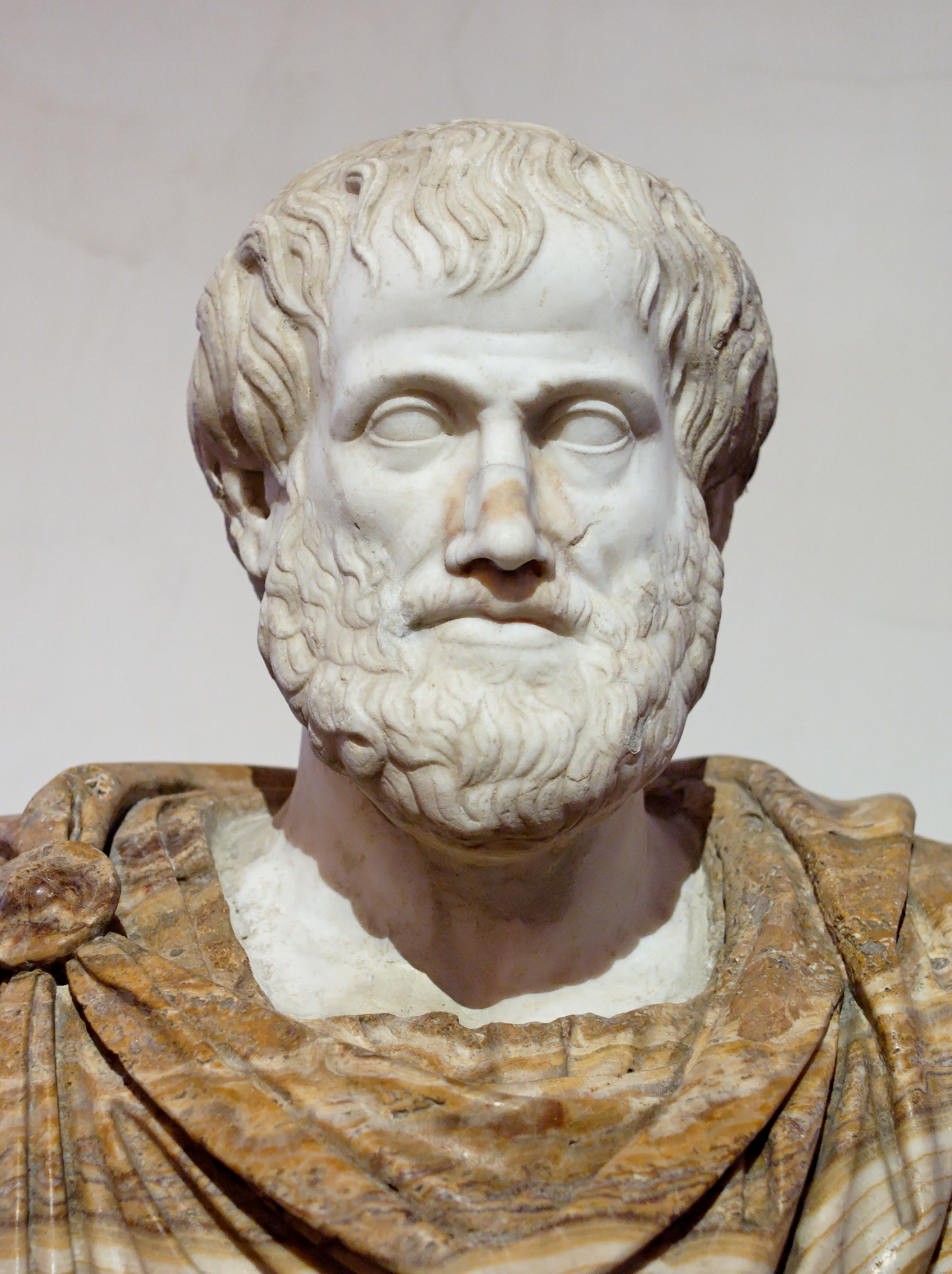
Quote of the Week: Aristotle on God

If, then, God is always in that good state in which we sometimes are, this compels our wonder; and if in a better this compels it yet more. And God is in a better state. And life also belongs to God; for the actuality of thought is life, and God is that actuality; and God's self-dependent actuality is life most good and eternal.

Aristotle, Metaphysics, Book XII, 1072.b24

Friday, September 6, 2013

What if there were no Trinity?

h/t The Gospel Coalition

“If there were no Trinity, there could be no incarnation, no objective redemption, and therefore no salvation; for there would then be no one capable of acting as Mediator between God and man. In his fallen condition man has neither the inclination nor the ability to redeem himself. All merely human works are defective and incapable of redeeming a single soul. Between the Holy God and sinful man there is an infinite gulf; and only through One who is Deity, who takes man’s nature upon Himself and suffers and dies in his stead, thus giving infinite value and dignity to that suffering and death, can man’s debt be paid. Nor could a Holy Spirit who comes short of Deity apply that redemption to human souls. Hence if salvation is to be had at all it must be of divine origin. If God were only unity, but not plurality, He might be our judge, but, so far as we can see, could not be our Saviour and sanctifier. The fact of the matter is that God is the way back to Himself, and that all of the hopes of our fallen race are centered in the truth of the Trinity.”

Loraine Boettner, “The Trinity”

Tuesday, July 30, 2013

Quote of the week: Wayne Grudem on the being of God

“It is not just that we exist and God has always existed, it is also that God necessarily exists in an infinitely better, stronger, more excellent way. The difference between God's being and ours is more than the difference between the sun and a candle, more than the difference between the ocean and a raindrop... God's being is qualitatively different.”

- Wayne Grudem, 

Tuesday, June 18, 2013

Quote of the Week: J.P. Moreland on God and freedom

“If you were to force people to do something against their free choice, you would be dehumanizing them. The option of forcing everyone to go to heaven is immoral, because it's dehumanizing; it strips them of the dignity of making their own decision; it denies them their freedom of choice; and it treats them as a means to an end. When God allows people to say 'no' to him, he actually respects and dignifies them.”
― J.P. Moreland, Love your God with all your mind: the role of reason in the life of the soul

Thursday, May 9, 2013

Ligonier Coram Deo: The Sureness of Christ's Payment

Today, Ligonier's "coram deo" from their devotional post is rooted in the following verse:
Steadfast love and faithfulness meet; righteousness and peace kiss each other.”(Psalm 85:10) 

What is the coram deo?
Today’s passage contains the beautiful imagery of justice and peace (or mercy, as other translations put it) kissing each other. Our Father graciously restores peace between Himself and us in Christ Jesus. This peace is permanent, for it is not based on ignoring our sins and faults but on God’s sure willingness to accept the perfect payment of Jesus in our behalf. And since the Lord has accepted this payment, this peace must be eternal, for otherwise He would have let His Son die in vain. 
 God is the God who rescues. His rescuing is different from fictional heroes like Superman who after rescuing the person(s) leaves after the rescue is over. God is different. He rescues then protects the person like a shepherd watches over his sheep. 

John 6:37 - 40
37  All that the Father gives me will come to me, and whoever comes to me I will never cast out. 38 For I have come down from heaven, not to do my own will but the will of him who sent me. 39 And this is the will of him who sent me, that I should lose nothing of all that he has given me, but raise it up on the last day. 40 For this is the will of my Father, that everyone who looks on the Son and believes in him should have eternal life, and I will raise him up on the last day.”
John 10:27-30 
27  My sheep hear my voice, and I know them, and they follow me. 28  I give them eternal life, and they will never perish, and no one will snatch them out of my hand. 29 My Father, who has given them to me,[a] is greater than all, and no one is able to snatch them out of the Father's hand. 30  I and the Father are one.”
Romans 8:31 - 39
31 What then shall we say to these things? If God is for us, who can be[i] against us? 32  He who did not spare his own Son but gave him up for us all, how will he not also with him graciously give us all things? 33 Who shall bring any charge against God's elect? It is God who justifies. 34  Who is to condemn? Christ Jesus is the one who died—more than that, who was raised— who is at the right hand of God, who indeed is interceding for us.[j] 35 Who shall separate us from the love of Christ? Shall tribulation, or distress, or persecution, or famine, or nakedness, or danger, or sword? 36 As it is written,
“For your sake we are being killed all the day long;
    we are regarded as sheep to be slaughtered.”
37 No, in all these things we are more than conquerors through him who loved us. 38 For I am sure that neither death nor life, nor angels nor rulers, nor things present nor things to come, nor powers, 39 nor height nor depth, nor anything else in all creation, will be able to separate us from the love of God in Christ Jesus our Lord.

These are three of my favorite biblical passages. These passages give us the concept of "the God who rescues." God rescues sinners from ultimate suffering. He truly rescues. He doesn't pull you out of danger then wish that you don't fall into danger again. His rescue is concrete. His rescue is without fail. His rescue is so true that "no one is able to snatch them out" of His hand. When you put your trust in Christ alone for salvation then you are rescued from ultimate suffering. You aren't just rescued from a current unfavorable predicament. You are rescued from an eternity of separation from God.

This doesn't mean the rest of your days on earth will be perfect. However, it does mean that the Helper will preserve you until your final salvation, which will be at the end of your earthly life. The doctrine "the perseverance of the saints" is a doctrine full of hope, security, and a realization that the God who rescues you, not only rescues you, but loves you and nothing can separate you from the love He lavishes on those who trust in Him alone for salvation.

Monday, May 6, 2013

Quote of the Week - Jonathan Edwards on the virtues of Christ

All the virtues which appeared in Christ shone brightest in the close of His life, under the trials He then met. Eminent virtue always shows brightest in the fire. Pure gold shows its purity chiefly in the furnace. It was chiefly under those trials which Christ endured in the close of His life, that His love to God, His honor of God's majesty, His regard to the honor of His law, His spirit of obedience, His humility, contempt of the world, His patience, meekness, and spirit of forgiveness towards men, appeared. Indeed, every thing that Christ did to work out redemption for us appears mainly in the close of His life. Here mainly is His satisfaction for sin, and here chiefly is His merit of eternal life for sinners, and here chiefly appears the brightness of His example which He has set us for imitation.

- Jonathan Edwards, Dictionary of Burning Words of Brilliant Writers, 1895, pg. 67

Friday, May 3, 2013

Friday Mentionables: Mind and Cosmos, Psalms and Theology


Another week, another "Mentionables" post. I don't have many links this week due to lack of reading. Hate on haters. :\

J.P. Moreland's philosophical note on Nagel's Mind and Cosmos

C.S. Lewis' reflections on the psalms
John Calvin on the Wonder of the Psalms 

Tony-Allen continues his Therapeutic Theology series with Therapeutic Theology IV: A New "D'Oh"! 

Friday, April 26, 2013

Friday Mentionables - Suffering, Molinism (again? ugh), Nietzsche, and patriotic atheism!


It's that time again. Your favorite time of the week - Friday mentionables!

Theology
Sentintias Why I'm not an Arminian
Paul Helm Shunning Middle Knowledge
Theology for the Church ROSES vs TULIP
Design of Providence Therapeutic Theology III: the lost context

Uncategorized
A View From the Right Atheism is Patriotic? What the...?
Nietzsche on the Deaths of Socrates and Jesus

Quotes on suffering from Sproul and Bill Craig
"God deserves to be trusted. He merits our trust in Him. The more we understand of His perfections, the more we understand how trustworthy He is. That is why the Christian pilgrimage moves from faith to faith, from strength to strength, and from grace to grace. It moves toward a crescendo.
and
The bottom-line assumption for anyone who believes in the God of providence is that ultimately there are no tragedies. God has promised that all things that happen—all pain, all suffering, all tragedies—are but for a moment, and that He works in and through these events for the good of those who love Him (Rom. 8:28). That’s why the apostle Paul said that the pain, the suffering, the affliction that we bear in this world isn’t worthy to be compared, isn’t worthy to be mentioned in the same breath, with the glory and the blessedness that God has stored up for His people (Rom. 8:18)."
Sproul, Surprised by Suffering

"Christ endured a suffering beyond all understanding:  he bore the punishment for the sins of the whole world.  None of us can comprehend that suffering. Though He was innocent, He voluntarily underwent incomprehensible suffering for us.  And why? - because He loves us so much. How can we reject him who gave up everything for us?


When we comprehend his sacrifice and his love for us, this puts the problem of evil in an entirely different perspective. For now we see clearly that the true problem of evil is the problem of our evil.  Filled with sin and morally guilty before God, the question we face is not how God can justify Himself to us, but how we can be justified before Him.

When God asks us to undergo suffering that seems unmerited, pointless, and unnecessary, meditation upon the cross of Christ can help to give us the moral strength and courage needed to bear the cross that we are asked to carry.  So, paradoxically, even though the problem of evil is the greatest objection to the existence of God, at the end of the day God is the only solution to the problem of evil.  If God does not exist, then we are locked without hope in a world filled with gratuitous and unredeemed suffering. God is the final answer to the problem of evil, for He redeems us from evil and takes us into the everlasting joy of an incommensurable good, fellowship with Himself."
William Lane Craig, The Problem of Evil

Monday, April 22, 2013

Ligonier blog: Paul Helm's Molinism 101

So how interesting is it that Ligonier's blog has a post from Paul Helm on Molinism 101? It's interesting because I posted links on molinism here at my Reformed blog and am working on a post detailing how reformed Christians can and should embrace Molina's middle knowledge and view on divine providence. Now while it's interesting that Ligonier posted this piece in their blog, that doesn't mean it has changed my mind on the molinism and reformed theology. I have some questions about his post and hopefully one of my readers can answer them (Tony I'm talking to you). Let's get into it.

Paul Helm seems to have a nice understanding of Molinism. He wrote:
"What is middle knowledge? At the center of this recent interest has been God’s knowledge of possibilities involving human choice (the ‘counterfactuals of freedom’ as they have been called). Why this innovation? Its proponents are concerned to preserve what they consider to be two vital beliefs. The first is God’s providence and total foreknowledge. The second is the idea that human beings are ineradicably free in an indeterministic sense. When we speak of indeterministic freedom, we mean that any human being, in a given set of circumstances, has the power to choose A or to choose not-A. The problem is obvious. How can this be consistent with God’s universal providential rule and his purposes of redemption?"
Yup.

He then goes on to explain, on Molinism, how that question is answered.

"The Molinists’ way of attempting to keep all this together was to suggest that there existed, besides God’s natural knowledge and his free knowledge, a third kind of knowledge. They argued that God also has “middle knowledge” (between the other two). What this means can be briefly explained. Given a whole array of possible worlds (that God knows), given worlds in which men and women were free in the relevant indeterministic sense, God knows what they would freely choose in every possible circumstance. God has knowledge of all such possible outcomes. If placed in one set of circumstances, God knows what Jones would freely choose. If placed in another set of circumstances, God knows what Jones would freely choose. This is true for all possible people and all possible circumstances. God has this middle knowledge by inspection of all the possibilities that the free will of each person might choose.

In His power and wisdom, He chooses that possible world, that total combination of individuals and circumstances, whose expressions of free will best serve His purposes. Thus, God’s omniscience is preserved, and human free will is preserved. The moral evil that occurs in the chosen world is not the direct responsibility of God but of those creatures who exercise their choices in a malevolent fashion."
Again, yup. You're correct sir. God chooses that possible world. He chooses what world to actualize. He sovereignly brings into being the individuals and circumstances that best serve His purposes. That is sovereign. Also, man's free will is still kept in the equation. This seems like a good way to explain the biblical concept of divine providence! Why then does Paul Helm, close to the end of his post, write this?
"...the Molinists’ conception of free will makes it impossible for God to exercise providential control over his creation. Why? Because men and women would be free to resist His decree. God can only bring to pass the actions of free agents via his middle knowledge of what they would freely do if…
Further, given the Molinist view of freedom, it is impossible for God to bring about the conversion of any person by the exercise of His effective call, for in the view of the Molinists it is always possible for an individual to resist God’s grace. Men and women must freely cooperate with what God says and does if they are to become Christians. God’s grace is always resistible. Reformed Christians have no good reason to accept the speculative concept of middle knowledge and strong reasons to reject it."
 Why did Paul write that? I was reading along in the post thinking "Okay, he does understand this, he understands that. Huh, what is his concern then with molinism?" Then I get to the above part, "Whaaaaaaaat?" Men and women would be free to resist his decree? Actually no, the men and women who are created, living, making decisions, etc. are only doing so because God, in His power, wisdom, and sovereignty chose to make them to bring about His purposes. See that's the thing with molinism: it's not *just* foreknowledge. Simple foreknowledge doesn't get the same result as molinism. On molinism, God is working through all the various circumstances, decisions, possibilities, worlds, etc. that serve His purposes then he creates. He builds. He does what God does. It's not as if he creates everything then hopes, wishes, and pleads with man to conform to his plan. On the contrary, man does what God has chosen for reality (directly and indirectly, you know the permissive will thing).

I'm very surprised at Paul Helm's concerns with molinism. From my tadpole, amateur perspective it seems as though he is confusing molinism with open theism or general foreknowledge of the charismatic/pentecostal variety. I don't know. Someone help me out here. 

Friday, April 19, 2013

Friday Mentionables: Music, freedom of the will, and more!


Music
Songs for the book of Luke - good music here. You know, it's actually worship music. So, if you like the contemporary "boyfriend jesus" music then you may not like it. Check it out anyway.

Usual stuff
Molinism vs Calvinism - This is a great answer to a question by Dr. Craig.
What is molinism and is it biblical?
from Gotquestions.org
Molinism - Greg Koukl
Molinism/middle knowledge entry at Internet Encyclopedia of Philosophy
Robert Adams's New Anti-Molinist Argument
William Hasker on Divine Knowledge - Another objection critiqued by Dr. Craig

Monday, March 25, 2013

Quote of the Week - Stephn T Davis on the Wrath of God

I think we ignore the concept of the wrath of God at our own cost. Indeed, I would argue for the radical proposition that our only hope as human beings is the wrath of God. (It is also true, of course, that our only hope is the grace of God, but that is another matter). The wrath of God shows that we do not live, as so many today suppose that we do, in a random and morally neutral universe. God’s wrath shows us that right and wrong are objectively real, they are to be discovered, not created. The wrath of God is our only hope because it teaches us the moral significance of our deeds and shows us how life is to be lived.

-Stephen T. Davis, Risen Indeed: Making Sense of the Resurrection (Grand Rapids: Eerdmans Publishing Co., 1993), p. 166.

Monday, March 4, 2013

Quote of the Week - C.S. Lewis on Friendship

“In friendship...we think we have chosen our peers. In reality a few years' difference in the dates of our births, a few more miles between certain houses, the choice of one university instead of another...the accident of a topic being raised or not raised at a first meeting--any of these chances might have kept us apart. But, for a Christian, there are, strictly speaking no chances. A secret master of ceremonies has been at work. Christ, who said to the disciples, "Ye have not chosen me, but I have chosen you," can truly say to every group of Christian friends, "Ye have not chosen one another but I have chosen you for one another." The friendship is not a reward for our discriminating and good taste in finding one another out. It is the instrument by which God reveals to each of us the beauties of others.”

― C.S. Lewis, The Four Loves

Friday, February 15, 2013

Do I sustain myself for salvation? Or Does God sustain me?

Is my salvation dependent on me? Or does God sustain my salvation? Is God the one who has saved me from wrath? Is God the good shepherd who guards his sheep? Do the sheep guard themselves from thieves and carnivores?

The Apostle John records Jesus as saying "My sheep hear my voice, and I know them, and they follow me. I give them eternal life, and they will never perish, and no one will snatch them out of my hand. My Father, who has given them to me, is greater than all, and no one is able to snatch them out of the Father's hand. I and the Father are one.” (Read John 10 in its entirety)

Paul, the master theologian, wrote in his letter to the Romans:
For those whom he foreknew he also predestined to be conformed to the image of his Son, in order that he might be the firstborn among many brothers. And those whom he predestined he also called, and those whom he called he also justified, and those whom he justified he also glorified. 

What then shall we say to these things? If God is for us, who can be against us? He who did not spare his own Son but gave him up for us all, how will he not also with him graciously give us all things? Who shall bring any charge against God's elect? It is God who justifies. Who is to condemn? Christ Jesus is the one who died—more than that, who was raised—who is at the right hand of God, who indeed is interceding for us. Who shall separate us from the love of Christ? Shall tribulation, or distress, or persecution, or famine, or nakedness, or danger, or sword? As it is written,

“For your sake we are being killed all the day long;
    we are regarded as sheep to be slaughtered.”

No, in all these things we are more than conquerors through him who loved us. For I am sure that neither death nor life, nor angels nor rulers, nor things present nor things to come, nor powers, nor height nor depth, nor anything else in all creation, will be able to separate us from the love of God in Christ Jesus our Lord.

The Apostle Peter wrote in his letter to the Christians in Asia Minor: Blessed be the God and Father of our Lord Jesus Christ! According to his great mercy, he has caused us to be born again to a living hope through the resurrection of Jesus Christ from the dead, to an inheritance that is imperishable, undefiled, and unfading, kept in heaven for you, who by God's power are being guarded through faith for a salvation ready to be revealed in the last time.

These are but a few verses from the Bible that speak of God guarding the Christian's salvation. From what I understand salvation is completed for the Christian. If this is correct the Christian can find rest in this knowledge. He should let it seep into his heart. She should be thankful. If the Christian is clothed in the righteousness of Christ and that is what God sees when he looks at the Christian then I would assume a habit of gratefulness for God's gift would be built in the Christian. I wouldn't think a life of moral carelessness would be adopted by the Christian if this knowledge has seeped into her soul.

What can we gather from this data? That God loves his children warts and all (to borrow a phrase from Sproul); that God guards his children's salvation and his children can rest in this knowledge knowing they will get their inheritance promised to them by their God.

Monday, February 11, 2013

Quote of the Week - B.B. Warfield on Biblical Inspiration

"Representations are sometimes made as if, when God wished to produce sacred books which would incorporate His will – a series of letters like those of Paul, for example – He was reduced to the necessity of going down to earth and painfully scrutinizing the men He found there, seeking anxiously for the one who, on the whole, promised best for His purpose; and then violently forcing the material He wished expressed through him, against his natural bent, and with as little loss from his recalcitrant characteristics as possible. Of course, nothing of the sort took place. If God wished to give His people a series of letters like Paul’s He prepared a Paul to write them, and the Paul He brought to the task was a Paul who spontaneously would write just such letters."

- Benjamin Breckinridge Warfield, “The Biblical Idea of Inspiration,” in The Inspiration and Authority of the Bible, ed. Samuel G. Craig with an Intro. by Cornelius Van Til (Philadelphia: Presbyterian & Reformed, 1970), pp. 155

Tuesday, January 29, 2013

Quote of the Week - Michael S Horton on Metanarratives

Metanarratives attempt to justify “us” and judge the rest of the world, while in biblical faith God judges us as well and justifies the ungodly.

- Michael S Horton, The Christian Faith: A Systematic Theology for Pilgrims on the Way 

Monday, October 29, 2012

Quote of the Week - William Lane Craig on the Self-Existence of God

"What we want to say on the basis of this material is that God is a self-existent being. That is to say, all of finite reality depends upon God for its creation, for its present existing, and for its future being. He brings it into existence, he sustains it in being, and it will remain in being so long as he sustains it and conserves it into the future. In other words, all of reality outside of God is shot through with a radical dependence. It is in existence only so long as God creates and sustains its existence. Were he to withdraw his creative power, the universe would be annihilated in a blink of an eye.
...
If God exists, then why does God exist? What is the cause of God? Once we understand the concept of God as a necessary being, then you can see that this is a question which is, if not meaningless, then at least obtuse. It is sort of asking, “Why is it that all bachelors are unmarried?” Nobody racks his brain trying to figure out why it is that every bachelor you meet is unmarried. Why? Because the very concept of a bachelor is that of an unmarried male. Similarly, the concept of God as the greatest conceivable being is that of a necessary being. Therefore, it is impossible for God not to exist. His non-existence is impossible. God had no beginning, he depends upon nothing, he cannot not exist. Therefore, the question, “Where did God come from?” or “Why does God exist?” simply shows that the person asking the question doesn’t understand the concept of a necessary, self-existent being."

William Lane Craig, Defenders Class, Doctrine of God part 2